100% Same
SALT COMPOSITIONMedicine UsageStrength
 61%
61%with substitute medicines
 Salt Composition in both






WHO GMP
Certified

15 Days Easy
Returns

Long Expiry
(>8 Months)

WHO GMP
Certified

15 Days Easy
Returns

Long Expiry
(>8 Months)

Delivery details unavailable
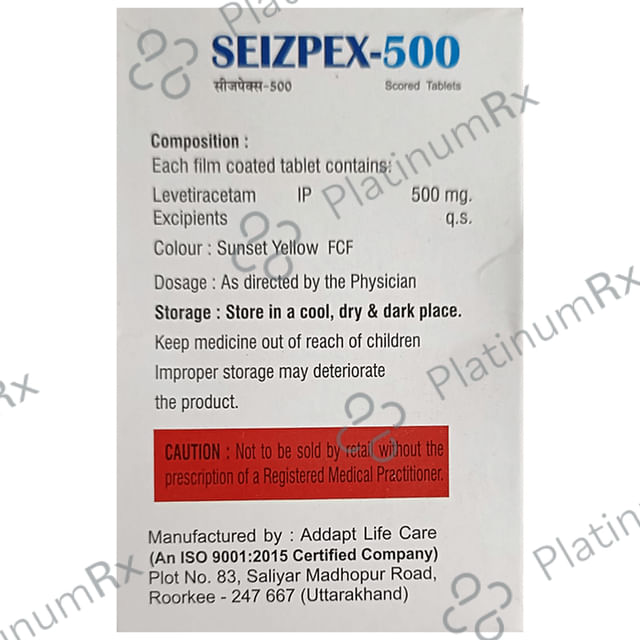
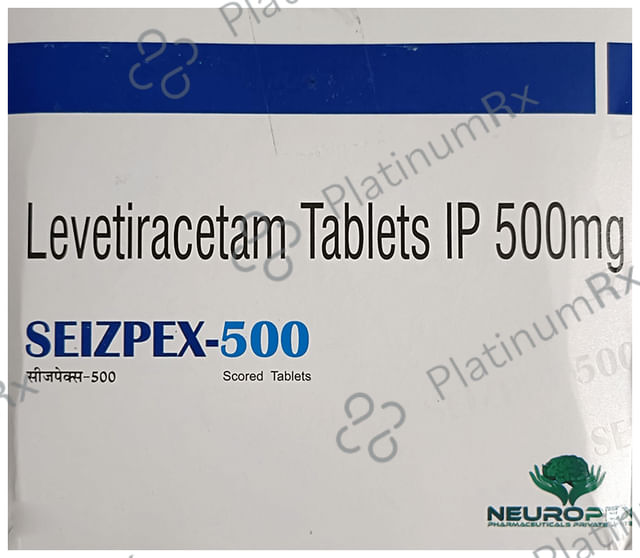
Uses of Seizpex 500 Tablet

Treatment of Epilepsy/Seizures
Customers also bought




More About Seizpex 500 Tablet
Quick Summary
Seizpex 500 Tablet (Levetiracetam) is a prescription liquid medication belonging to the class of Anticonvulsant or Anti-epileptic Drugs (AEDs). It is a broad-spectrum anti-seizure medication used to manage and prevent various types of epileptic seizures in both adults and children. Levetiracetam's primary mode of action involves binding to the Synaptic Vesicle Protein 2A (SV2A) in the brain, stabilising nerve cell activity, and preventing the excessive electrical discharges that cause seizures. Because this is a medication for a neurological disorder, patients and caregivers must be vigilant for significant, but uncommon, neuropsychiatric side effects, including mood changes, agitation, and suicidal thoughts. Strict adherence to the prescribed liquid dose and monitoring for behavioural changes are essential for safe treatment.
Detailed Description
Seizpex 500 Tablet contains Levetiracetam, formulated as a palatable syrup to facilitate accurate dosing, particularly in the pediatric population and patients who struggle with swallowing tablets. Levetiracetam represents a unique advancement in AED therapy due to its distinct and highly specific mechanism of action, which differentiates it from older anticonvulsant medicines.
Epilepsy is characterised by sudden, abnormal, and high-frequency firing of brain neurons. Levetiracetam's role is to modulate neurotransmitter release and neuronal excitability. It achieves this by binding selectively to SV2A, a protein believed to play a critical role in the fusion of synaptic vesicles (containing neurotransmitters) with the presynaptic membrane. By modulating this process, Levetiracetam helps regulate the flow of signals between brain cells, thereby stabilising hyperexcitable neurons and reducing the likelihood of a seizure event.
As a liquid formulation, Seizpex 500 Tablet requires precise measurement using the calibrated oral syringe provided by the manufacturer to ensure the correct dose is administered every time. This long-term therapy is crucial for controlling seizure frequency and improving the patient's quality of life.
Uses of Seizpex 500 Tablet
Seizpex 500 Tablet is used for the management and control of various types of seizures in epilepsy:
Monotherapy or Adjunctive Therapy for Partial Onset Seizures:
Used alone or with other medications for seizures originating in one area of the brain, with or without secondary generalisation, in patients aged 4 years and older.
Adjunctive Therapy for Myoclonic Seizures:
Used in patients aged 12 years and older with Juvenile Myoclonic Epilepsy (JME).
Adjunctive Therapy for Primary Generalised Tonic-Clonic Seizures (PGTCS):
Used in patients aged 6 years and older with Idiopathic Generalised Epilepsy.
Benefits of Seizpex 500 Tablet
Levetiracetam is a cornerstone treatment in epilepsy management, offering several key benefits:
Broad Spectrum Efficacy:
Effective across a wide range of seizure types, simplifying treatment regimens for patients with multiple seizure patterns.
Favourable Interaction Profile:
Unlike many older AEDs, Levetiracetam has minimal interaction with the liver's cytochrome P450 enzyme system, reducing the risk of drug-drug interactions with other medications (e.g., contraceptives, heart medications).
Pediatric Formulation:
The syrup form allows for easy, accurate dosing in infants and children, ensuring better compliance and therapeutic control.
Rapid Action:
It typically reaches therapeutic blood concentrations relatively quickly, providing faster seizure control compared to some older medications.
Side Effects of Seizpex 500 Tablet
Seizpex 500 Tablet is generally well-tolerated, but common and important neurological and psychiatric side effects require monitoring.
Critical Side Effect (Seek Urgent Medical Attention): Severe Behavioural Changes
The most significant risks involve changes in mood and behaviour. Mandatory and continuous monitoring for psychiatric symptoms is required.
Contact your doctor immediately or seek emergency care if you or a caregiver notices:
- Severe mood swings, irritability, agitation, or aggression.
- Signs of depression, suicidal thoughts or behaviour (a risk associated with all AEDs).
- New or worsening psychotic symptoms (hallucinations, paranoia).
- Worsening of seizure control (indicating potential treatment failure or withdrawal).
Common Side Effects (Usually Mild and Temporary):
- Somnolence (drowsiness) or excessive sedation.
- Dizziness or vertigo.
- Headache.
- Fatigue and asthenia (lack of energy).
- Nasopharyngitis (common cold symptoms) and infection.
- Anorexia (loss of appetite).
- Behavioural disturbances in children (aggression, irritability).
Directions for Use
Always administer Seizpex 500 Tablet exactly as prescribed by your doctor. The dose must be accurately measured using the oral syringe or dosing cup provided with the syrup.
- Measure Accurately: Use the provided measuring device (not a kitchen spoon) to ensure the precise volume (mL) of syrup is administered.
- Timing: The total daily dose is typically divided and taken twice daily (morning and evening) with a 12-hour interval, to maintain stable drug levels.
- Food: The syrup may be taken with or without food.
- Dosing: Treatment starts at a low dose and is gradually increased (titrated) over several weeks to the effective maintenance dose to minimise side effects. Never abruptly discontinue this medication.
How it works
Levetiracetam works by modulating nerve activity in the central nervous system to prevent the rapid and repetitive firing of neurons associated with seizures. Primary Target: The drug selectively binds to the Synaptic Vesicle Protein 2A (SV2A). This protein is found on synaptic vesicles, which store and release neurotransmitters (chemical messengers) between nerve cells.
Modulatory Effect: By binding to SV2A, Levetiracetam is thought to dampen the fusion of these vesicles with the neuronal membrane, thereby inhibiting the release of excitatory neurotransmitters.
Physiological Result: This modulatory action reduces the overall synchronicity and excitability of nerve cells in the brain, raising the threshold for seizure activity and suppressing its spread.
Safety Advice for Seizpex 500 Tablet

Pregnancy
CONSULT DOCTOR.
Inform your doctor immediately if pregnant or planning to conceive. All AEDs carry a risk to the foetus, and the decision to use Levetiracetam must balance seizure control against potential risk. Use only under strict medical advice.

Breastfeeding
CONSULT DOCTOR.
Levetiracetam passes into breast milk. Breastfeeding is only advised if the expected benefit to the mother outweighs the potential risk to the breastfed infant. Monitor the infant for drowsiness.

Alcohol
AVOID.
Alcohol can increase the CNS depressant effects of Levetiracetam, leading to increased drowsiness, dizziness, and impaired motor skills. It may also lower the seizure threshold.

Driving
USE CAUTION.
Due to the common side effects of somnolence and dizziness, patients should not drive or operate heavy machinery until they know how the medication affects them and the side effects have stabilised.
Renal/Hepatic
RENAL DOSE ADJUSTMENT REQUIRED.
Since Levetiracetam is primarily cleared by the kidneys, patients with kidney impairment will require a significantly reduced dosage and careful monitoring.
Quick Tips for Seizpex 500 Tablet
- Never Stop Abruptly: Stopping the medication suddenly can trigger increased seizure frequency or status epilepticus (a medical emergency). If discontinuation is necessary, it must be done gradually under strict medical supervision.
- Monitor for Mood Changes: Because psychiatric side effects (irritability, aggression, suicidal ideation) are a known risk, caregivers and patients must be vigilant for any changes in mood or behaviour and report them immediately.
- Dosing is Key: Always use the measuring device provided with the syrup to ensure the correct millilitre (mL) volume is given. An inaccurate dose can lead to ineffective seizure control or increased side effects.
- Carry an ID: Always carry identification (such as a medical alert bracelet) indicating that you have epilepsy and are taking an AED.
- Kidney Check: If you have known kidney issues, remind your doctor, as the Levetiracetam dose will need to be adjusted based on your creatinine clearance (CrCl).
Storage Advice
- Store the syrup at room temperature, ideally between 20°C to 25°C (68°F to 77°F). Do not freeze.
- Keep the medicine in the original packaging, away from excessive moisture, heat, and direct light.
- Keep the tablets out of the reach of children and pets.
- Once the bottle is opened, check the specific expiry instructions provided by the manufacturer (often stable for 6 months after opening).
- Do not use the medication past the expiry date printed on the packaging.
Drug-Food Interaction
Levetiracetam has minimal food-based interactions:
- General Rule: The medicine can be taken with or without food. Food intake does not significantly affect the absorption or efficacy of the drug.
- Caffeine/Stimulants: While not a direct interaction, excessive caffeine intake or other stimulants should be moderated, as they can sometimes lower the seizure threshold in susceptible individuals.
Interactions with Other Drugs
Levetiracetam is notable for having very few clinically significant drug interactions compared to many older AEDs. Clinically Significant Interactions with other drugs include:
- CNS Depressants (e.g., Opioids, Benzodiazepines, Sleeping Pills): Combining Levetiracetam with other CNS depressants may amplify side effects such as drowsiness, dizziness, and decreased alertness. Use requires caution.
- Methotrexate: Levetiracetam can reduce the clearance of Methotrexate (an immunosuppressant), leading to increased plasma concentrations and potential toxicity of Methotrexate. Monitoring is required.
- First-Generation Antihistamines (e.g., Diphenhydramine, Promethazine): These drugs have significant sedative effects and should be used cautiously while on Levetiracetam.
Drug-Disease Interactions
Caution is required for patients with:
- Renal Impairment (Kidney Disease): Since Levetiracetam is primarily cleared by the kidneys, patients with reduced kidney function (creatinine clearance less than 80 mL/min) will require a significant dose reduction to prevent drug accumulation and increased toxicity.
- Severe Hepatic Impairment (Liver Disease): Although the liver only metabolises a small portion of the drug, patients with severe liver disease should be monitored closely, as they often have concurrent kidney issues.
- Psychiatric History: Patients with a pre-existing history of depression, psychosis, or suicidal ideation should be monitored with extra caution, as Levetiracetam may exacerbate these conditions.
Daily Dose
The daily dose of Levetiracetam is highly individualised and determined by the patient's age, weight (especially for syrup dosing), kidney function, and seizure type.
- Typical Starting Dose (Adults/Adolescents > 50kg): Usually begins at taken twice daily.
- Titration: The dose is then increased gradually, often by every two weeks, up to a maximum recommended dose of twice daily (total daily).
- Pediatric Dosing (Syrup): For children, dosing is calculated based on body weight (mg/kg). Doses are typically started low and adjusted upward weekly. It is essential to follow the specific mL volume prescribed by the doctor.
- Consistency: The total daily dose must be divided into two equal doses and taken consistently every 12 hours.
Overdose
An overdose of Seizpex 500 Tablet can result in severe central nervous system depression, leading to extreme drowsiness, coma, agitation, aggression, respiratory depression, and poor coordination.
If you suspect an overdose, seek immediate emergency medical care. Do not wait for symptoms to appear. Treatment typically involves supportive care, ensuring airway patency, and may involve dialysis to remove the drug from the bloodstream, especially in severe cases or in patients with renal impairment.
What If You Forget to take Seizpex 500 Tablet?
If you forget to take your scheduled dose, take it as soon as you remember. However, if it is closer to the time for your next dose (e.g., less than 6 hours away from the next dose), skip the missed dose entirely and return to your regular dosing schedule. Do not take a double dose to compensate for the one you missed, as this increases the risk of side effects and toxicity. Missing doses can increase the risk of a breakthrough seizure.
Fact Box
Therapeutic Class
Neurological Agent
Action Class
Synaptic Vesicle Protein 2A (SV2A) Modulator
Chemical Class
Antiepileptic Drug (AED) / Anticonvulsant
Habit Forming
No


Disclaimer
PlatinumRx is committed to providing reliable and accurate information to support informed customer decisions. However, all information made available on the Platform, including product descriptions, comparisons, and other content, is provided solely for general informational purposes. Such information is not intended to diagnose, prevent, treat, or cure any medical condition, nor should it be relied upon as a substitute for professional medical advice, diagnosis, or treatment.
More Medicines By Manufacturer
More Medicines With Salt
Top Selling Medicines
Top Selling Devices
