100% Same
SALT COMPOSITIONMedicine UsageStrength
 18%
18%with substitute medicines
 Salt Composition in both
You Searched

Our Recommendation




WHO GMP
Certified

15 Days Easy
Returns

Long Expiry
(>8 Months)

WHO GMP
Certified

15 Days Easy
Returns

Long Expiry
(>8 Months)

Delivery by
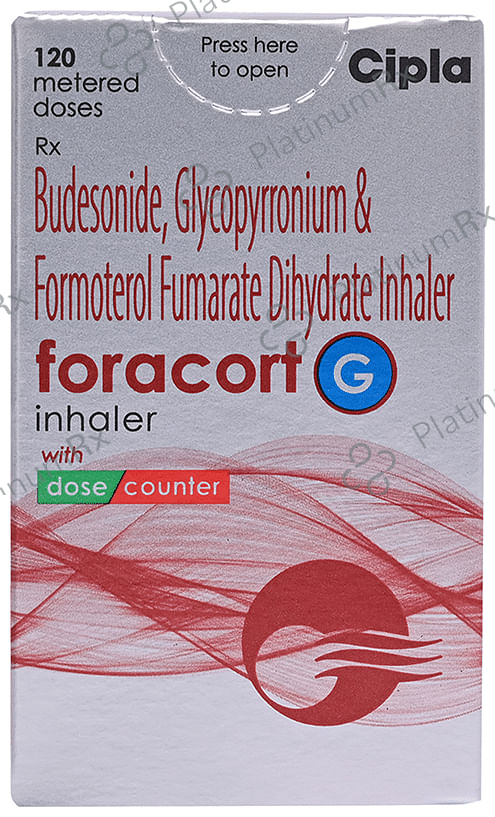
Uses of Foracort G 200/6/12.5mcg Inhaler 120MDI

Chronic obstructive pulmonary disease (COPD)
Customers also bought



More About Foracort G 200/6/12.5mcg Inhaler 120MDI
Quick Summary
Foracort G 200 6 12 5mcg Inhaler 120mdi is a combination of three inhaler medications, budesonide, formoterol & glycopyrronium, which is often used for long-term management of chronic obstructive pulmonary disease (COPD) in adults. While budesonide is an inhaled corticosteroid (ICS) that reduces airway inflammation, formoterol is a long-acting beta-2 agonist (LABA) that relaxes smooth muscle in the bronchi, keeping the airway open for longer. The third component, glycopyrronium, is a long-acting muscarinic antagonist (LAMA) that prevents constriction of bronchi by blocking the action of acetylcholine.
Detailed Description
Foracort G 200 6 12 5mcg Inhaler 120mdi contains a triple medicine combination (budesonide, formoterol & glycopyrronium) that addresses different aspects of airway dysfunction seen in COPD. Budesonide in Foracort G 200 6 12 5mcg Inhaler 120mdi reduces chronic inflammation in the airway by suppressing the action of immune cells such as eosinophils, mast cells, and T-lymphocytes, which subsequently result in decreased mucus production and airway swelling. The formoterol component of Foracort G 200 6 12 5mcg Inhaler 120mdi acts on beta-2 adrenergic receptors present on the smooth muscles of the airway, resulting in relaxation and widening of the bronchial tubes. The third component, glycopyrrolate, blocks muscarinic M3 receptors found in the smooth muscles of the airway. This prevents acetylcholine from constricting the airway, thereby providing additional airway relaxation.
This triple combination is often recommended to people who are unable to manage the symptoms of COPD with dual therapy. It is a maintenance medication, so sudden discontinuation of Foracort G 200 6 12 5mcg Inhaler 120mdi after prolonged use should be avoided. The safety and efficacy of this medication have not been established for children; this is why it should not be given to kids without consulting a paediatrician.
Uses of Foracort G 200 6 12 5mcg Inhaler 120mdi
Foracort G 200 6 12 5mcg Inhaler 120mdi is used for the long-term maintenance treatment of COPD in adults, which includes both chronic bronchitis and emphysema. Doctors would prescribe this medication to patients who are unable to manage their condition with dual therapy. This medicine improves the flow in the airway, reduces breathlessness and frequency of flare-ups.
Benefits of Foracort G 200 6 12 5mcg Inhaler 120mdi
- A combination of three distinct medications with different actions: anti-inflammatory, beta-2 agonist bronchodilation (LABA), and a long-acting muscarinic antagonist (LAMA), in one single inhaler.
- Lowers the frequency of moderate to severe COPD flare-ups as compared to dual combination medications.
- Provides double bronchodilation through two pathways (LABA and LAMA), resulting in greater and more long-lasting widening of the airways.
- Improves lung function, which is often measured by measurements such as FEV1 (forced expiratory volume) and peak expiratory flow
- Reduces dependence on short-acting rescue inhalers when used consistently as a maintenance medicine
- As concluded in the ETHOS Phase III clinical trial, patients with moderate-to-very-severe COPD who received triple therapy with an inhaled glucocorticoid, LAMA & LABA for COPD had a lower risk of dying from any cause compared to patients who received only the two bronchodilators without a corticosteroid.
Side Effects of Foracort G 200 6 12 5mcg Inhaler 120mdi
Common side effects of Foracort G 200 6 12 5mcg Inhaler 120mdi may include:
- Oral candidiasis (fungal infection in the mouth and throat)
- Hoarseness or voice changes with inhalers
- Headache
- Cough
- Tremor (involuntary shaking)
- Nasal dryness or irritation
- Palpitations (sudden pounding or racing of the heart)
- Difficulty or painful urination
- Muscle spasm or joint pain
Uncommon side effects of Foracort G 200 6 12 5mcg Inhaler 120mdi may include:
- Increased heart rate (tachycardia)
- Mild increase in blood pressure
- Low potassium levels in blood (hypokalemia)
- Bruising or thinning of the skin
- Increase in blood glucose levels
- Sleep disturbances & restlessness
- Slower growth rate in children on long-term therapy
- Pneumonia could be seen in people with COPD
- Dryness of mouth
- Constipation or urinary retention
- Anxiety
Serious side effects that may require immediate medical attention include:
- Paradoxical bronchospasm, sudden worsening of breathing after using the inhaler due to constriction of the airway
- Severe adrenal insufficiency, usually seen when people switch from systemic steroids. Adrenal insufficiency affects the adrenal glands (present on top of each kidney) and stops the production of the cortisol hormone, resulting in chronic fatigue, muscle weakness, weight loss and low blood pressure
- Cushing's syndrome features, which include moon face, weight gain and purple coloured stretch marks, are seen with prolonged high doses
- Severe infections, such as TB (tuberculosis), pneumonia, or fungal infections, due to immune suppression
- increased intraocular pressure (pressure inside the eye) or glaucoma (an eye disease that can result in permanent vision loss)
- Angioedema, a severe allergic reaction that can cause swelling of the face, mouth, tongue and throat
- Severe cardiovascular side effects such as chest pain, fast or irregular heartbeat, and extremely high blood pressure
Directions for Use
- Metered-dose inhaler (MDI) only: Shake well, exhale fully, seal your lips around the mouthpiece, inhale deeply, hold breath for 10 seconds. Always rinse your mouth with water and spit after each use to prevent oral fungal infection.
- Standard dose: 2 puffs twice daily, which should be taken 12 hours apart (or as per your doctor’s advice)
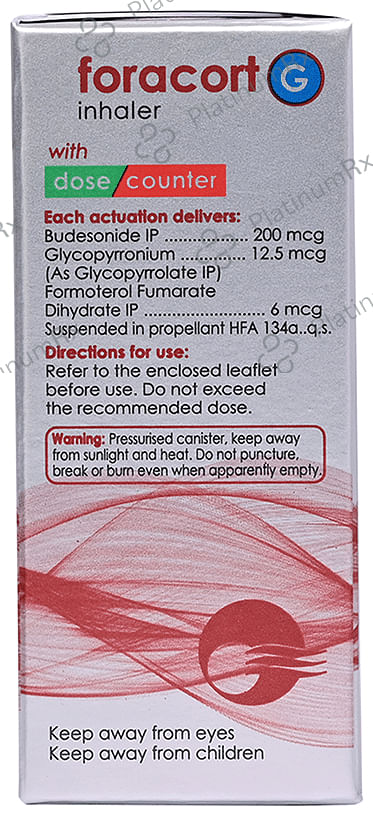
- Per puff medication delivered: Each puff delivers 160 mcg budesonide, 7.2 mcg glycopyrronium bromide, and 5 mcg formoterol fumarate dihydrate.
It is advised to take the inhaler at the same time each day to maintain consistent levels of the medicine. This is a maintenance inhaler, so it must not be used for sudden breathlessness or an asthma attack. Discard the inhalation canister when the dose counter reaches zero.
How it works
- Budesonide enters the cell and binds to glucocorticoid receptors present within the cell. This complex travels to the nucleus (the structure that contains DNA), where it stops pro-inflammatory genes, such as eosinophils, mast cells, and T-lymphocytes, and activates anti-inflammatory genes. This reduces immune cell activity at the site of inflammation, less tissue damage, lower swelling & inflammation, & less mucus production.
- Formoterol targets a different site. It stimulates beta-2 adrenergic receptors on the smooth muscle surrounding the bronchial tubes. This causes the muscle to relax, widening the airway and allowing air to flow freely in and out of the lungs. The bronchodilator effect could start in 5 to 15 minutes and last up to 12 hours, providing sustained bronchodilation throughout the day.
- Glycopyrronium blocks muscarinic M3 receptors that are present on the smooth muscles present in the airway, preventing the action of acetylcholine (constriction of the airway), providing sustained relief. Since both LABA and LAMA act via different receptor pathways, their combined action of relaxing the airway is greater than either agent alone.
Safety Advice for Foracort G 200 6 12 5mcg Inhaler 120mdi

Pregnancy
Caution
If you’re planning to take Foracort G 200 6 12 5mcg Inhaler 120mdi during pregnancy, consulting your doctor is necessary, as they can check if the benefits outweigh the risks.

Breastfeeding
Caution
Both budesonide & formoterol are excreted into the breast milk in small amounts. So, you should consult your doctor before use.

Driving
Caution
Does not usually affect driving ability. Drive only when alert; rare dizziness could impair reaction.

Liver
Caution
Budesonide metabolises extensively in the liver. Therefore, people with significant hepatic impairment may have an increased risk of systemic exposure due to low clearance.

Kidney
Caution
Glycopyrronium is primarily released from the body through the kidneys. So, people with severe renal impairment may be at risk for systemic glycopyrrolate exposure. Consult your doctor before use.

Alcohol
Caution
Alcohol can irritate the airway and increase the risk of infections, thereby reducing the efficacy of treatment. Limit or stop alcohol consumption.
Quick Tips for Foracort G 200 6 12 5mcg Inhaler 120mdi
- Always rinse your mouth and gargle with water after using a budesonide inhaler, as this would reduce the risk of oral candidiasis and hoarseness.
- Foracort G 200 6 12 5mcg Inhaler 120mdi should not be used during an emergency. You should carry your rescue inhaler separately.
- If you are switching from systemic corticosteroids to budesonide, do not stop your previous steroid abruptly. Follow your doctor's tapering plan to avoid adrenal crisis.
- Avoid grapefruit juice throughout your treatment, as it can substantially increase budesonide levels in the blood.
- If you have diabetes, monitor your blood glucose more closely after starting budesonide, especially oral formulations.
- Glycopyrronium can worsen urinary symptoms or cause urine retention in men who are diagnosed with benign prostatic hyperplasia. Inform the doctor before using.
- Do not use Foracort G 200 6 12 5mcg Inhaler 120mdi along with other COPD combination inhalers unless told otherwise by the doctor.
Storage Advice
Store Foracort G 200 6 12 5mcg Inhaler 120mdi at room temperature between 20–25°C in a dry place away from direct environmental factors like sunlight, extreme heat, cold, and moisture. Do not freeze and keep the foil pouch sealed until ready to use. Keep the inhaler away from open flames and sources of heat. Dispose of the MDI canister when the dose counter reads zero.
Drug-Food Interaction
- Grapefruit and grapefruit juice (SEVERE): Grapefruit strongly inhibits CYP3A4 enzymes that break down budesonide in the gut wall and liver. This can increase budesonide blood levels significantly, increasing the risk of systemic steroid side effects.
- Alcohol (MODERATE): Alcohol can worsen the irritation in the airway and increase the risk of respiratory infections, thereby reducing the effectiveness of treatment. So, you should limit or avoid alcohol consumption.
Interactions with Other Drugs
CYP3A4 inhibitors
SEVERE
Medicines like ketoconazole, itraconazole & ritonavir strongly inhibit CYP3A4. This hinders the breakdown of budesonide, thereby increasing the risk of systemic steroid toxicity, including adrenal suppression.
Other LABAs
SEVERE
Combining formoterol with other LABAs, like salmeterol & arformoterol, may increase the risk of cardiovascular side effects such as increased heart rate, blood pressure, & arrhythmias.
Other LAMAs (anticholinergics)
SEVERE
Concurrent use of glycopyrronium with tiotropium, or umeclidinium, increases anticholinergic burden and may result in side effects like urine retention, high eye pressure, dry mouth, & tachycardia.
Beta-blockers
SEVERE
Metoprolol, atenolol, and propranolol block formoterol's bronchodilatory action in the airway and can cause severe bronchoconstriction.
MAO inhibitors and tricyclic antidepressants
CAUTION
When taken along with Formoterol, these can have cardiovascular effects, including the risk of arrhythmias.
CYP3A4 inducers
CAUTION
Rifampicin, phenytoin, and carbamazepine speed up budesonide metabolism, reducing its efficacy.
Antidiabetics
CAUTION
Budesonide raises blood glucose, thus interfering with the action of antidiabetics like insulin, metformin, & sulfonylureas.
Diuretics
CAUTION
Diuretics like furosemide & thiazides lower potassium levels, which can be worsened by the hypokalaemic effects of formoterol and budesonide.
QT-prolonging drugs
CAUTION
These drugs, when combined with formoterol, may heighten the risk of life-threatening arrhythmias.
Live vaccines
CAUTION
Prolonged corticosteroid use may impair immune response to live attenuated vaccines such as MMR and varicella.
Systemic corticosteroids
CAUTION
When taken with systemic corticosteroids, budesonide may increase the overall steroid burden, raising the risk of adrenal suppression & Cushing's syndrome features.
Drug-Disease Interactions
- Heart disease or arrhythmia: Formoterol can cause an increase in heart rate by activating beta-2 adrenergic receptors. Further, the anticholinergic action of glycopyrronium may result in tachycardia (rapid heart rate).
- Benign prostatic hyperplasia or urinary outflow obstruction: Glycopyrronium's anticholinergic effect can worsen urinary flow and trigger urinary retention as they block the action of acetylcholine. Acetylcholine generally help in the contraction & relaxation of bladder muscles.
- Glaucoma or an increase in intraocular pressure: Long-term use of corticosteroids and the anticholinergic effects of glycopyrronium can worsen narrow-angle glaucoma.
- Diabetes mellitus: Budesonide can raise blood glucose levels, so frequent monitoring is required.
- Active infections (TB, fungal, viral): Budesonide represses local immune responses and can worsen latent or active tuberculosis and other active infections. Screening for TB should be done before starting treatment.
- Osteoporosis: Prolonged corticosteroid use can reduce bone density.
- Liver disease: Impaired hepatic metabolism reduces first-pass clearance of budesonide, increasing systemic exposure risk.
- Hypokalemia: Both formoterol and budesonide can lower potassium. Patients on diuretics must monitor their potassium levels frequently.
- Severe renal impairment: Low glycopyrronium clearance due to impaired kidneys can increase systemic exposure risk.
Overdose
One small incident of Budesonide & Formoterol overdose may not result in a life-threatening emergency. However, it may lead to exaggerated side effects of both components, which may include tremors, palpitations, severe headache, rapid heart rate (tachycardia), low potassium levels, adrenal suppression or elevated blood glucose. Worth noting here is that prolonged overuse may cause symptoms of Cushing's syndrome and serious cardiac effects. But excessive use or concurrent use with other LABAs or LAMAs can result in clinically significant cardiovascular effects. If you suspect an overdose, stop using the medication and contact your doctor immediately.
What If You Forget to take Foracort G 200 6 12 5mcg Inhaler 120mdi?
If you miss a dose, take it as soon as you remember, unless it is almost time for your next dose. In that case, skip the missed dose and continue with your regular schedule. Never take a double dose to compensate for the missed one.
References
Fact Box
Therapeutic Class
Corticosteroid & dual bronchodilator combination
Action Class
Inhaled corticosteroid/ LABA / LAMA
Chemical Class
Synthetic glucocorticosteroid (Budesonide) + Long-acting beta-2 adrenergic agonist (Formoterol) + Long-acting muscarinic antagonist (Glycopyrronium)
Habit Forming
No
Checkout Editorial Policy
Disclaimer
PlatinumRx is committed to providing reliable and accurate information to support informed customer decisions. However, all information made available on the Platform, including product descriptions, comparisons, and other content, is provided solely for general informational purposes. Such information is not intended to diagnose, prevent, treat, or cure any medical condition, nor should it be relied upon as a substitute for professional medical advice, diagnosis, or treatment.
More Medicines By Manufacturer
More Medicines With Salt
Top Selling Medicines
Top Selling Devices
