Treatment of Bacterial eye infectionsTreatment of Bacterial eye infections
In Treatment of Bacterial eye infections Lyramycin 0.3% Eye Drop is an antibiotic medicine. It works by stopping the growth of the bacteria that is causing the infection. It helps relieve symptoms such as pain, redness, itching or soreness caused due to eye infections. The dose and duration of treatment will be decided by your doctor based on your condition. Make sure you complete the full course of treatment. This will ensure that the infection is completely cured and prevent it from returning.In Treatment of Bacterial eye infections Lyramycin 0.3% Eye Drop is an antibiotic medicine. It works by stopping the growth of the bacteria that is causing the infection. It helps relieve symptoms such as pain, redness, itching or soreness caused due to eye infections. The dose and duration of treatment will be decided by your doctor based on your condition. Make sure you complete the full course of treatment. This will ensure that the infection is completely cured and prevent it from returning.
Side Effects
The majority of side effects typically do not necessitate medical intervention. and disappear as your body adjusts to the medicine.
Doctor consultation is advised if they persist or if you're worried about them.The majority of side effects typically do not necessitate medical intervention. and disappear as your body adjusts to the medicine.
Doctor consultation is advised if they persist or if you're worried about them.
How to use
This medication is designated for external application solely. Utilize it according to the dosage and duration instructed by your doctor. Check the label for directions before use. Hold the dropper close to the eye without touching it. Gently squeeze the dropper and place the medicine inside the lower eyelid. Wipe off the extra liquid.This medication is designated for external application solely. Utilize it according to the dosage and duration instructed by your doctor. Check the label for directions before use. Hold the dropper close to the eye without touching it. Gently squeeze the dropper and place the medicine inside the lower eyelid. Wipe off the extra liquid.
How it works
Lyramycin 0.3% Eye Drop is an antibiotic. It stops bacterial growth in the eye by preventing synthesis of essential proteins required by bacteria to carry out vital functions. This treats your eye infection.Lyramycin 0.3% Eye Drop is an antibiotic. It stops bacterial growth in the eye by preventing synthesis of essential proteins required by bacteria to carry out vital functions. This treats your eye infection.
Alcohol
No interaction has been found or established.No interaction has been found or established.
Pregnancy
Seek medical advice from your doctor: Lyramycin 0.3% Eye Drop is unsafe to use during pregnancy as there is definite evidence of risk to the developing baby. However, the doctor may rarely prescribe it in some life-threatening situations if the benefits are more than the potential risks. Doctor consultation is advised.Seek medical advice from your doctor: Lyramycin 0.3% Eye Drop is unsafe to use during pregnancy as there is definite evidence of risk to the developing baby. However, the doctor may rarely prescribe it in some life-threatening situations if the benefits are more than the potential risks. Doctor consultation is advised.
Breast feeding
Safe when prescribed by an expert: Lyramycin 0.3% Eye Drop is safe to use during breastfeeding. Human studies suggest that the drug does not pass into the breastmilk in a significant amount and is not harmful to the baby.Safe when prescribed by an expert: Lyramycin 0.3% Eye Drop is safe to use during breastfeeding. Human studies suggest that the drug does not pass into the breastmilk in a significant amount and is not harmful to the baby.
Driving
Not Safe: Lyramycin 0.3% Eye Drop may cause blurring of your vision for a short time just after its use. Do not drive until your vision is clear.Not Safe: Lyramycin 0.3% Eye Drop may cause blurring of your vision for a short time just after its use. Do not drive until your vision is clear.
Kidney
No interaction found/establishedNo interaction found/established
Liver
No interaction found/establishedNo interaction found/established
What if I forget to take it?
If a dose of Lyramycin 0.3% Eye Drop is missed, it's advisable to consult your doctor.If a dose of Lyramycin 0.3% Eye Drop is missed, it's advisable to consult your doctor.
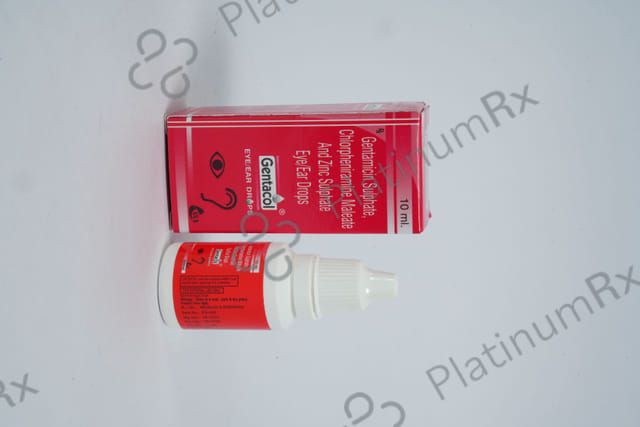
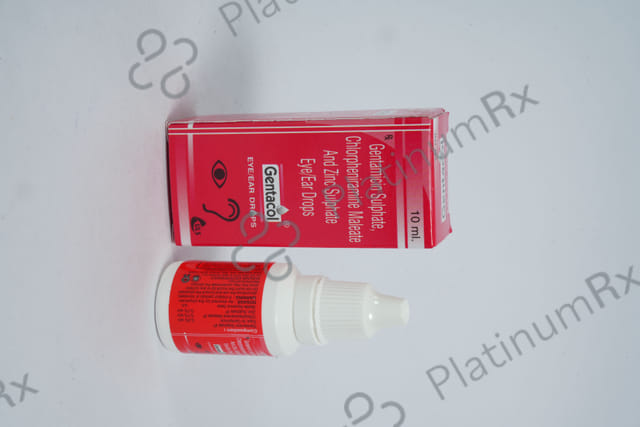
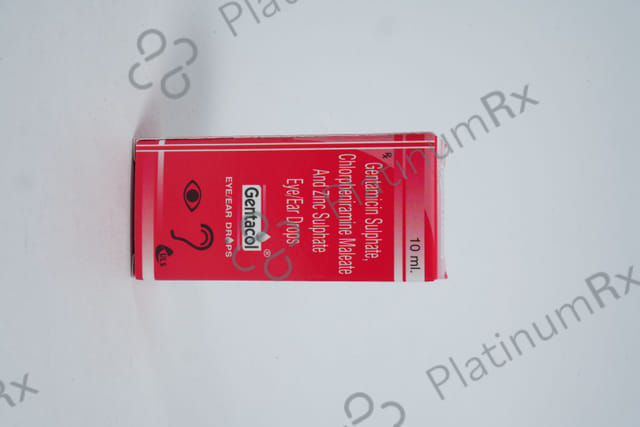
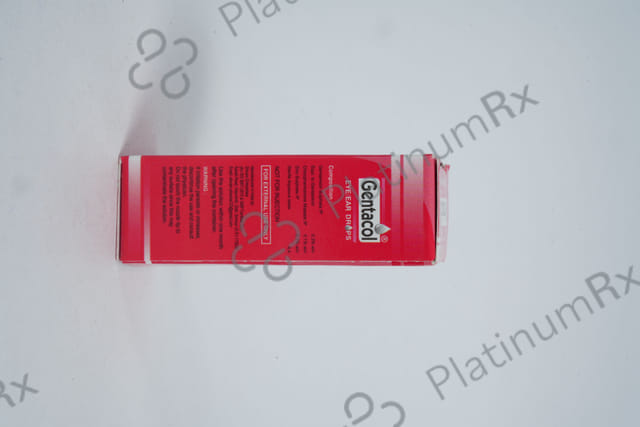
क्या Lyramycin और Gentacol दोनों दवाएं बिल्कुल एक जैसी हैं?
जी हाँ, दोनों दवाओं का सॉल्ट कंपोजिशन, खुराक (dosage) और असर बिल्कुल एक समान है। ये आपके शरीर में एक ही तरह से काम करती हैं। इनमें एकमात्र अंतर सिर्फ ब्रांड का है — और Gentacol गुणवत्ता से कोई समझौता किए बिना काफी अधिक किफायती है।
Is Lyramycin 0.3% Eye Drop effective?
Lyramycin 0.3% Eye Drop is effective when used as prescribed by your doctor. Do not stop taking it prematurely, as this may cause symptoms to return or worsen.
Can I stop using Lyramycin 0.3% Eye Drop if I feel better?
No, do not stop using Lyramycin 0.3% Eye Drop without consulting your doctor. Symptoms may improve before the infection is fully cleared, and stopping early can lead to worsening or recurrence of the infection.
What should I do if I forget to use Lyramycin 0.3% Eye Drop?
If you forget to use Lyramycin 0.3% Eye Drop, resume it as soon as you remember. If you have any doubts, consult your doctor.
In which conditions should Lyramycin 0.3% Eye Drop be avoided?
Lyramycin 0.3% Eye Drop should be avoided by those allergic to it or any of its components. If unsure or using it for the first time, consult your doctor.
What are the storage and disposal instructions for Lyramycin 0.3% Eye Drop?
Store Lyramycin 0.3% Eye Drop in its original container, tightly closed, and follow the storage instructions on the label. Dispose of any unused medicine safely and keep it away from children to prevent misuse.
MacDougall C, Chambers HF. Aminoglycosides. In: Brunton LL, Chabner BA, Knollmann BC, editors. Goodman & Gilmans: The Pharmacological Basis of Therapeutics. 12th ed. New York, New York: McGraw-Hill Medical; 2011. pp. 1515-16
Chambers HF, Deck DH. Aminoglycosides & Spectinomycin. In: Katzung BG, Masters SB, Trevor AJ, editors. Basic and Clinical Pharmacology. 11th ed. New Delhi, India: Tata McGraw Hill Education Private Limited; 2009. pp. 811-12
Briggs GG, Freeman RK, editors. A Reference Guide to Fetal and Neonatal Risk: Drugs in Pregnancy and Lactation. 10th ed. Philadelphia, PA: Wolters Kluwer Health; 2015. pp. 620-22
PlatinumRx is committed to providing reliable and accurate information to support informed customer decisions. However, all information made available on the Platform, including product descriptions, comparisons, and other content, is provided solely for general informational purposes. Such information is not intended to diagnose, prevent, treat, or cure any medical condition, nor should it be relied upon as a substitute for professional medical advice, diagnosis, or treatment.

 Salt Composition in both







 Benefits
 Side Effects
 How to use
 How it works


 What if I forget to take it?
 Manufacturer Address


