










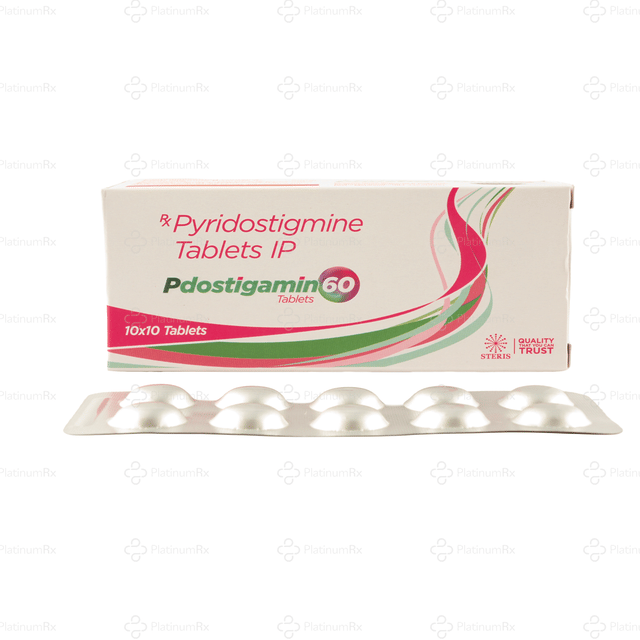
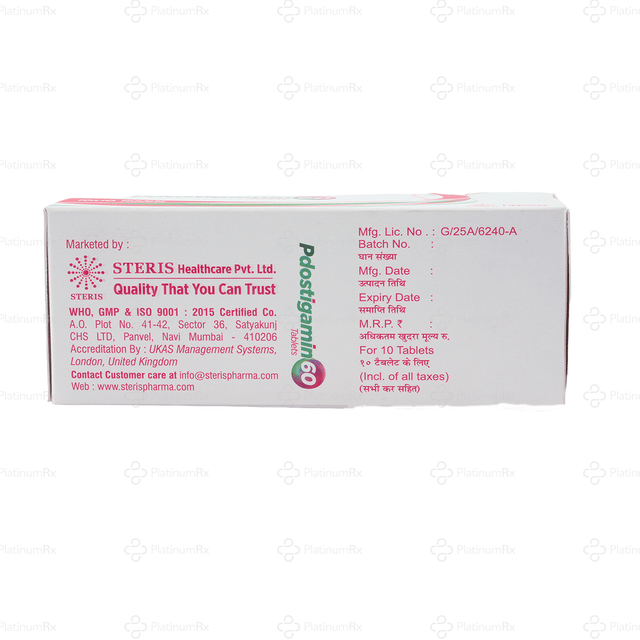
Distinon 60mg Tablet 10s
Samarth Life Sciences Pvt. Ltd.
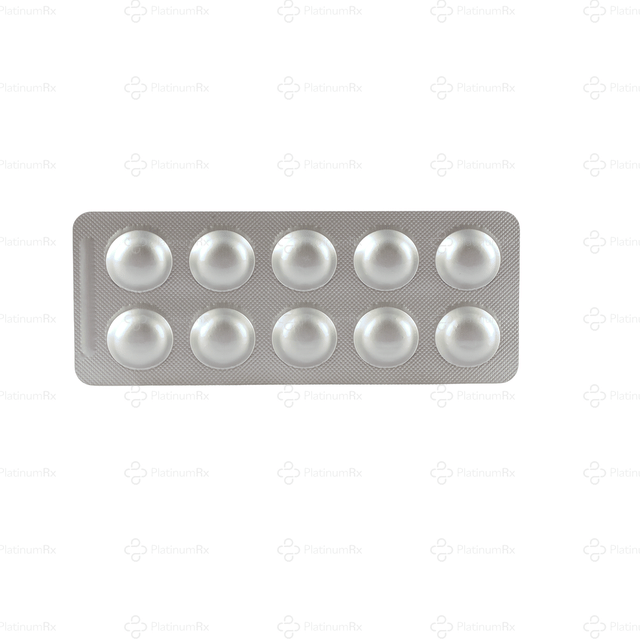
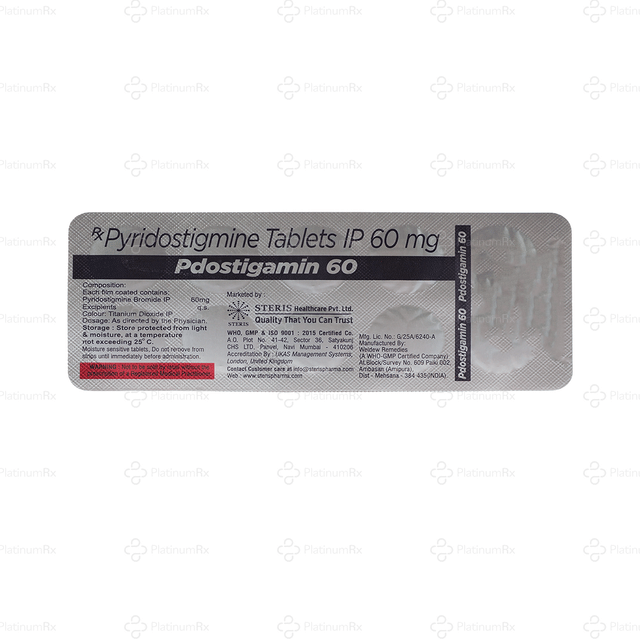
Strip of 10 tablets
₹110.21
₹134.40
18% Off
Dostimid 60mg Tablet 10s (also called pyridostigmine bromide) is a prescription medicine used to treat myasthenia gravis. Myasthenia gravis is a long-term condition in which the body's immune system disturbs the signals between nerves and muscles, leading to muscle weakness and tiredness. Dostimid 60mg Tablet 10s belongs to a group of medicines called cholinesterase inhibitors (anticholinesterases). It helps nerve signals reach the muscles more strongly, which can improve muscle strength. It eases the symptoms of myasthenia gravis rather than removing the underlying condition. It is available as regular tablets, extended-release tablets and an oral liquid, and it is taken only as directed by a doctor.
Oriental Pharma
See affordable match
Delivery by
...
FDA & GMP Certified
Long Expiry (>8 Months)
15 Days Easy Returns
Have a question?

Genuine Medicine
Pay On Delivery
Secure Payment

LegitScript Certified Online Pharmacy
Dostimid 60mg Tablet 10s (also called pyridostigmine bromide) is a prescription medicine used to treat myasthenia gravis. Myasthenia gravis is a long-term condition in which the body's immune system disturbs the signals between nerves and muscles, leading to muscle weakness and tiredness. Dostimid 60mg Tablet 10s belongs to a group of medicines called cholinesterase inhibitors (anticholinesterases). It helps nerve signals reach the muscles more strongly, which can improve muscle strength. It eases the symptoms of myasthenia gravis rather than removing the underlying condition. It is available as regular tablets, extended-release tablets and an oral liquid, and it is taken only as directed by a doctor.
Dostimid 60mg Tablet 10s is used for the symptomatic treatment of myasthenia gravis. This is a long-term autoimmune condition, meaning the body's own immune system causes the problem, and it leads to muscle weakness and tiredness. The trouble lies at the point where a nerve meets a muscle, called the neuromuscular junction.
Nerves send messages to muscles using a natural chemical messenger called acetylcholine. An enzyme called cholinesterase normally breaks down acetylcholine once the message is sent. Dostimid 60mg Tablet 10s slows down this enzyme. This lets acetylcholine last longer and build up at the nerve-muscle junction, so nerve signals pass across more freely and muscles can contract better.
Compared with neostigmine, an older medicine from the same group, Dostimid 60mg Tablet 10s has a longer duration of action and fewer stomach and bowel side effects. It works quickly, usually within about 30 minutes, and each dose of the regular tablet lasts for up to about four hours. For this reason, the regular tablets are often taken several times across the day. An extended-release tablet (180 mg) releases the medicine slowly. Its immediate effect is similar to one 60 mg regular tablet, but its effect lasts on average two and a half times longer. Some people use both forms together, as decided by their doctor.
Dostimid 60mg Tablet 10s needs careful medical supervision. Too little may leave muscles weak, but too much can also cause weakness. Taking more than needed can lead to a dangerous state called cholinergic crisis, in which muscle weakness increases and can affect the breathing muscles. A worsening of myasthenia gravis itself (myasthenic crisis) can look very similar. Because the two need very different treatment, any sudden increase in weakness needs urgent medical review.
Dostimid 60mg Tablet 10s leaves the body mainly through the kidneys, largely unchanged. People with kidney disease may need lower doses, which only a doctor can decide.
Dostimid 60mg Tablet 10s is used to ease the muscle weakness and tiredness caused by myasthenia gravis, a long-term autoimmune condition in which signals between nerves and muscles do not pass across well. It is usually the first medicine used for this condition, and for some people it may be the only medicine needed to manage their symptoms. It treats the symptoms rather than the underlying condition, and its effect lasts only a few hours, so it is taken several times a day.
Most side effects of Dostimid 60mg Tablet 10s come from the extra acetylcholine it allows to build up in the body. They are more likely when the dose is higher than the body needs.
Common Side Effects (Usually Mild)
Serious Side Effects (Seek Urgent Medical Attention)
To make a muscle move, a nerve releases a chemical messenger called acetylcholine. Acetylcholine crosses a tiny gap at the nerve-muscle junction and switches on the muscle. Straight after, an enzyme called cholinesterase breaks acetylcholine down so the signal stops.
In myasthenia gravis, an autoimmune condition, the signal between nerve and muscle does not pass across well, so muscles become weak and tired.
Dostimid 60mg Tablet 10s is a reversible cholinesterase inhibitor. "Inhibitor" means it blocks the enzyme, and "reversible" means the block wears off over time rather than lasting permanently. By slowing the breakdown of acetylcholine, Dostimid 60mg Tablet 10s lets more of the messenger stay at the junction for longer. This helps nerve impulses pass across more freely, so the muscle responds better.
The same extra acetylcholine also acts on other body parts controlled by this messenger, such as the gut, sweat glands, saliva glands, airways and eyes. This explains side effects such as stomach cramps, diarrhoea, sweating, drooling and small pupils (called muscarinic effects), and muscle twitching and cramps (called nicotinic effects).
Dostimid 60mg Tablet 10s is poorly absorbed from the gut, with only about 10% to 20% of a dose reaching the bloodstream. Its half-life, the time it takes for the level in the blood to fall by half, is about 3 hours. It is removed from the body in the urine, both unchanged and as broken-down products.

The safety of Dostimid 60mg Tablet 10s in human pregnancy has not been proven, and animal studies have shown effects on development. Tell your doctor if you are pregnant or planning a pregnancy, and call your doctor if you become pregnant while taking it. Do not stop treatment on your own.

Dostimid 60mg Tablet 10s passes into breast milk in very small amounts, and in limited reports it was not found in the blood of breastfed babies. Tell your doctor if you are breastfeeding so the benefits and risks can be discussed.

The oral liquid form of Dostimid 60mg Tablet 10s can contain a small amount of alcohol. Ask your doctor whether drinking alcohol is suitable for you while on treatment.

Dostimid 60mg Tablet 10s can cause blurred vision and muscle weakness in some people. Do not drive or use machines if you notice these effects.

Dostimid 60mg Tablet 10s is removed mainly by the kidneys. In people with kidney disease, the medicine can build up and the risk of side effects may be greater, so lower doses may be needed. Tell your doctor if you have kidney problems.

There is limited information on the use of Dostimid 60mg Tablet 10s in liver disease. It is removed from the body mainly by the kidneys. Tell your doctor if you have liver disease before starting Dostimid 60mg Tablet 10s.

The safety and effectiveness of Dostimid 60mg Tablet 10s in children have not been proven in formal studies. Use in children only under a specialist's care.

Older adults are more likely to have reduced kidney, liver or heart function, so doctors usually choose doses carefully. Report any slow heartbeat or worsening weakness.

Do not take Dostimid 60mg Tablet 10s if you are allergic to it or to other anticholinesterase medicines. Tell your doctor if you are sensitive to bromide.
Tell your doctor about all prescription and non-prescription medicines, vitamins and herbal products you use.
The dose of Dostimid 60mg Tablet 10s is set by a doctor for each person, based on how severe the myasthenia gravis is and how the body responds. The information below describes what the product label reports and is not a guide to self-dosing. These strengths come from US product labels, and the forms and strengths available in India may differ.
Always follow the exact dose and timing prescribed by your doctor. Do not change your dose, even if your weakness changes, without speaking to your doctor first.
Taking too much Dostimid 60mg Tablet 10s can cause cholinergic crisis. Signs can include:
An overdose is a medical emergency. Call for emergency help or go to the nearest hospital straight away, and take the medicine pack with you. In hospital, doctors support breathing and may give atropine to control some of the effects. Atropine does not reverse the muscle weakness, so breathing support may be needed.
Seek emergency medical help straight away if you notice:
Contact your doctor soon if side effects such as nausea, diarrhoea or cramps are troubling, if your muscle weakness is not controlled, or if you become pregnant.
Therapeutic Class
Drugs for myasthenia gravis (neuromuscular disorders)
Action Class
Reversible cholinesterase inhibitor (anticholinesterase)
Chemical Class
Carbamate; quaternary pyridinium compound (3-hydroxy-1-methylpyridinium bromide dimethylcarbamate)
Habit Forming
No
PlatinumRx is committed to providing reliable and accurate information to support informed customer decisions. However, all information made available on the Platform, including product descriptions, comparisons, and other content, is provided solely for general informational purposes. Such information is not intended to diagnose, prevent, treat, or cure any medical condition, nor should it be relied upon as a substitute for professional medical advice, diagnosis, or treatment.

More Medicines By Oriental Pharma
More Medicines With Pyridostigmine 60mg
Top Selling Medicines
Top Selling Devices
Top Selling Health Products