Vertin 16 Tablet: Uses, Composition, Side Effects & FAQs
Last Updated: November 24, 2026

Written by:
Umme Hani P, B.Pharma
Reviewed by:
Dr. Devika Rani, MBBSPublished date: 24-Nov-2026
Summary
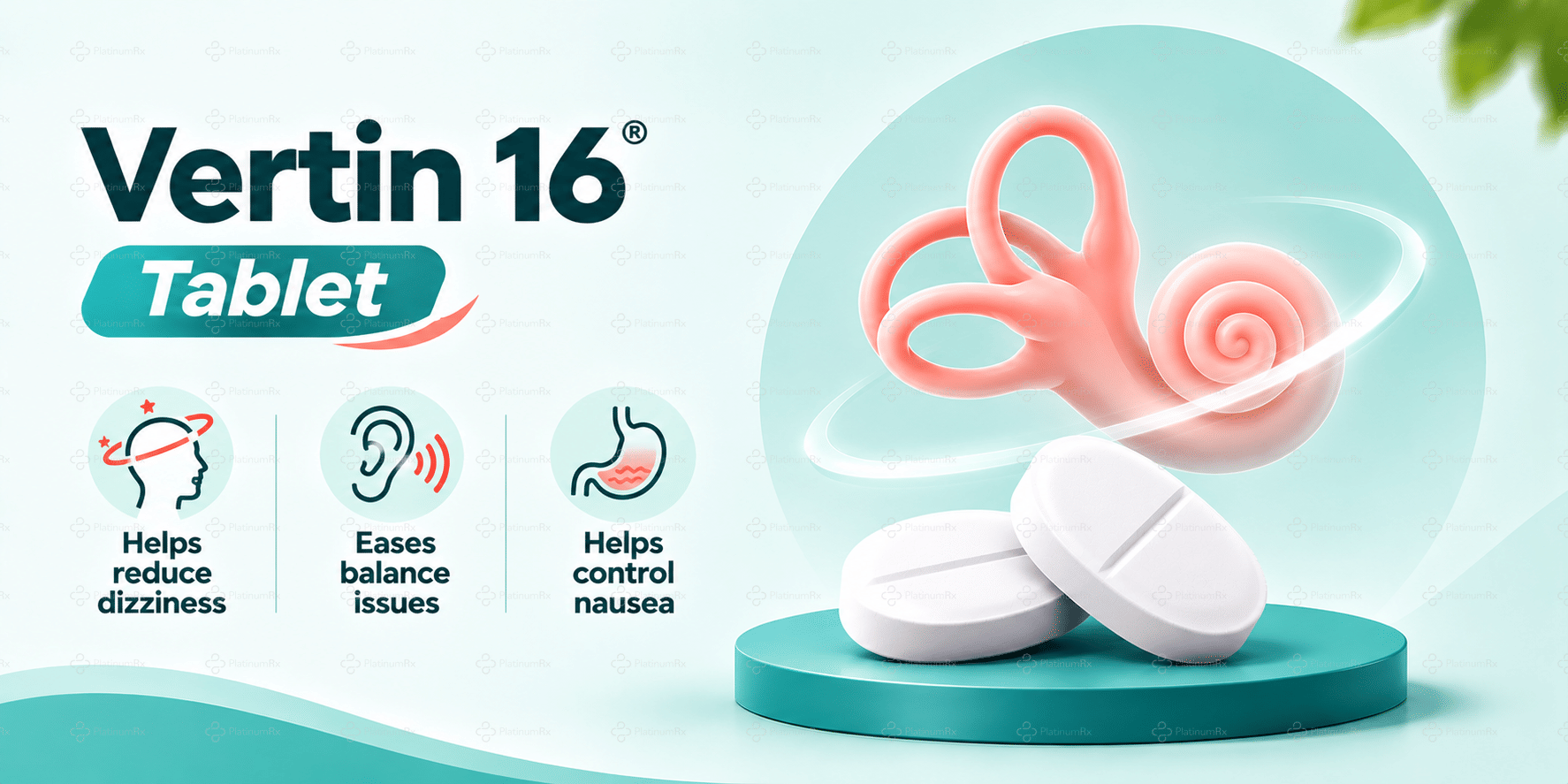
Vertin 16 is a tablet for the spinning dizziness that comes with Ménière's disease and other inner-ear balance problems. In India it is a prescription-only medicine, so it can only be started on a doctor's advice. Each tablet contains 16 mg of betahistine dihydrochloride, an anti-vertigo medicine. Taken every day, it aims to make attacks of vertigo less frequent and less severe.
Key Takeaways
- What it is: A tablet that aims to reduce attacks of spinning dizziness.
- Active ingredients: Betahistine dihydrochloride.
- Used for: Ménière's disease and vestibular vertigo, on a doctor's advice.
- Not meant for: Children under 18, people with an adrenal tumour called phaeochromocytoma, or dizziness that has not been checked.
- Prescription: Needed in India; it is a Schedule H medicine.
- How to take: Swallow whole with water, with a meal, at the same times daily.
- Common side effects: Headache, nausea and indigestion; usually mild and short-lived.
What Is Vertin 16?
Vertin 16 is a single-medicine tablet for dizziness that starts in the inner ear. The number in the name is the strength: each tablet carries 16 mg of betahistine dihydrochloride, an anti-vertigo medicine. In India it comes in strips of 15 tablets. Other versions with different strengths and tablet types are sold under the same name. Check which one your prescription is for.
Vertin 16 Composition (Per Tablet)
| Ingredient | Amount | Type | What it does |
|---|---|---|---|
| Betahistine dihydrochloride | 16 mg | Anti-vertigo | Improves blood flow in the inner ear and helps the brain adjust to balance signals. |
Always check the strength printed on your own pack.
How Does Vertin 16 Work?
Betahistine behaves a little like histamine, a natural signal your body uses in the inner ear and brain. It widens the small blood vessels in the inner ear so blood flows better, and it nudges the brain's balance system to adjust faster after a disturbance. The exact way it helps is only partly understood, but the aim is fewer and milder attacks of spinning dizziness.
Uses of Vertin 16
Doctors usually prescribe Vertin 16 for:
- Ménière's disease, where attacks of spinning dizziness come with ringing in the ear, hearing loss or a blocked feeling in the ear
- Vestibular vertigo, dizziness that starts in the balance system of the inner ear
- Tinnitus with Ménière's, the ringing or buzzing that comes along with the attacks
- Hearing loss with Ménière's, which often affects one ear at first
It does not get rid of the underlying condition, and it is not a treatment for dizziness caused by low blood pressure, low sugar, anaemia or a heart rhythm problem. It is also not the usual treatment for BPPV, where spinning starts when you turn your head in bed.
Ménière's Disease vs BPPV: Is Vertin 16 Right for You?
| Ménière's disease | BPPV | |
|---|---|---|
| What it feels like | Spinning with ringing, fullness or hearing loss in the ear | Short spinning spells when you move your head |
| Sign or pattern | Attacks last minutes to hours, then settle | Attacks last seconds to minutes, set off by rolling over in bed or looking up |
| Is Vertin 16 suitable? | Yes, if your doctor prescribes it | Usually no |
| What usually helps | Betahistine, a low-salt diet and an ENT review | Head and body movements taught by a doctor or physiotherapist |
Using betahistine for BPPV or for dizziness from another cause wastes time and delays the treatment that actually works.
How to Take Vertin 16 Tablet
- Swallow the tablet whole with a glass of water.
- Take it with a meal, which eases stomach upset.
- Take it at the same times each day, so the amount in your body stays steady.
- Keep taking it for as long as your doctor advises, and ask before stopping early.
Dosage of Vertin 16
Your doctor sets the dose from your age, your symptoms and how often the attacks come. The usual adult starting dose of betahistine is 16 mg three times a day, with meals. Maintenance doses are usually between 24 mg and 48 mg a day, so follow what is written on your prescription.
Never raise the dose on your own. A higher dose does not stop the spinning faster, but it does make nausea, indigestion and stomach upset more likely.
Vertin 16 is not recommended for anyone under 18, because there is not enough safety data in children. Older adults, and people with kidney or liver problems, are not usually given a different dose, but your doctor should know about these conditions.
In overdose, doses up to 640 mg have caused nausea, drowsiness and stomach pain, and serious problems have followed large deliberate overdoses. Go to the nearest emergency department and carry the strip with you; call 108 if the person is very drowsy or unwell.
What If You Miss a Dose?
Take the missed tablet as soon as you remember. If your next dose is close, skip the missed one and carry on as usual. Never take two tablets to catch up.
How Long Does It Take to Work?
Vertin 16 is not a fast reliever, so do not expect the room to stop spinning minutes after a tablet. It is taken daily to make attacks less frequent. The best reviews of the trials so far could not find enough evidence to say whether it helps. Give it time, and go back to your doctor if your attacks are not easing.
Storage
Keep the strip in its original pack, away from light and moisture, and do not store it above 25°C unless your own pack says otherwise. Keep it out of reach of children and check the expiry date before use.
Side Effects of Vertin 16
Most people take Vertin 16 without any trouble. When side effects happen, they are usually mild and settle in a few days.
Common and mild:
- Nausea
- Indigestion or a burning stomach
- Headache
- Vomiting
- Stomach pain
- Bloating and a full feeling
Rare but serious (stop the medicine and see a doctor right away):
- Swelling of the face, lips or tongue
- Breathing difficulty, throat tightness or faintness after a dose
- A spreading rash, hives or intense itching
Nausea, indigestion and headache are the ones seen in trials. Vomiting, stomach pain and bloating have been reported since the medicine came into wide use.
The stomach upset comes from betahistine itself. It is more likely on an empty stomach or at a higher dose, so taking it with meals usually settles it.
Who Should Not Take Vertin 16
- Anyone allergic to betahistine or any ingredient in the tablet
- People with phaeochromocytoma, a tumour of the adrenal gland
- Anyone under 18 (not recommended)
Precautions
Tell your doctor before taking Vertin 16 if you have:
- A stomach or duodenal ulcer now or in the past (it needs monitoring)
- Asthma (a few people cannot tolerate betahistine)
- Pregnancy or a plan to conceive (it is best avoided as a precaution)
- Breastfeeding (it is not known whether it passes into breast milk)
- Kidney or liver disease (tell your doctor even though no dose change is expected)
Drug Interactions
| Medicine | What can happen |
|---|---|
| Monoamine oxidase inhibitors (e.g. selegiline) | May slow how your body clears betahistine; tell your doctor if you take one. |
| Antihistamines (cetirizine, levocetirizine, chlorpheniramine) | May work against each other in theory; check before using them together. |
| Other medicines for vertigo or nausea | Not studied with Vertin 16; your doctor will decide what is safe together. |
| Herbal or Ayurvedic products | Not tested with it; show your doctor the label. |
Always tell your doctor about every medicine, supplement or home remedy you are using. Keep alcohol to a minimum, and avoid it completely while your dizziness is active.
Frequently Asked Questions About Vertin 16
When to See a Doctor
Vertin 16 is only for symptoms, so get medical help quickly if you have:
- Sudden weakness or numbness on one side, a drooping face, slurred speech or double vision
- Dizziness with a severe headache, fever and a stiff neck
- Sudden hearing loss in one ear
- Fainting, chest pain, a racing heartbeat or breathlessness
- Vomiting so much that you cannot keep fluids down
- Dizziness after a head injury, or dizziness that keeps getting worse
Call 112 for an emergency, or 108 for an ambulance.
The Bottom Line
Vertin 16 is a 16 mg betahistine tablet for the spinning dizziness of Ménière's disease and inner-ear balance problems. Take it every day with meals, at the same times, and never in a higher dose than your doctor prescribed. The common side effects are headache, nausea and stomach upset, and they usually settle once you take it with food. If your attacks are not easing, go back to your doctor rather than changing the dose yourself.
References

Add PlatinumRx as a preferred source on Google