Thrombophob Gel: Uses, Composition, Side Effects & FAQs
Last Updated: November 24, 2026

Written by:
Pankaj Kumar, B. Pharma
Reviewed by:
Dr. Devika Rani, MBBSPublished date: 24-Nov-2026
Summary
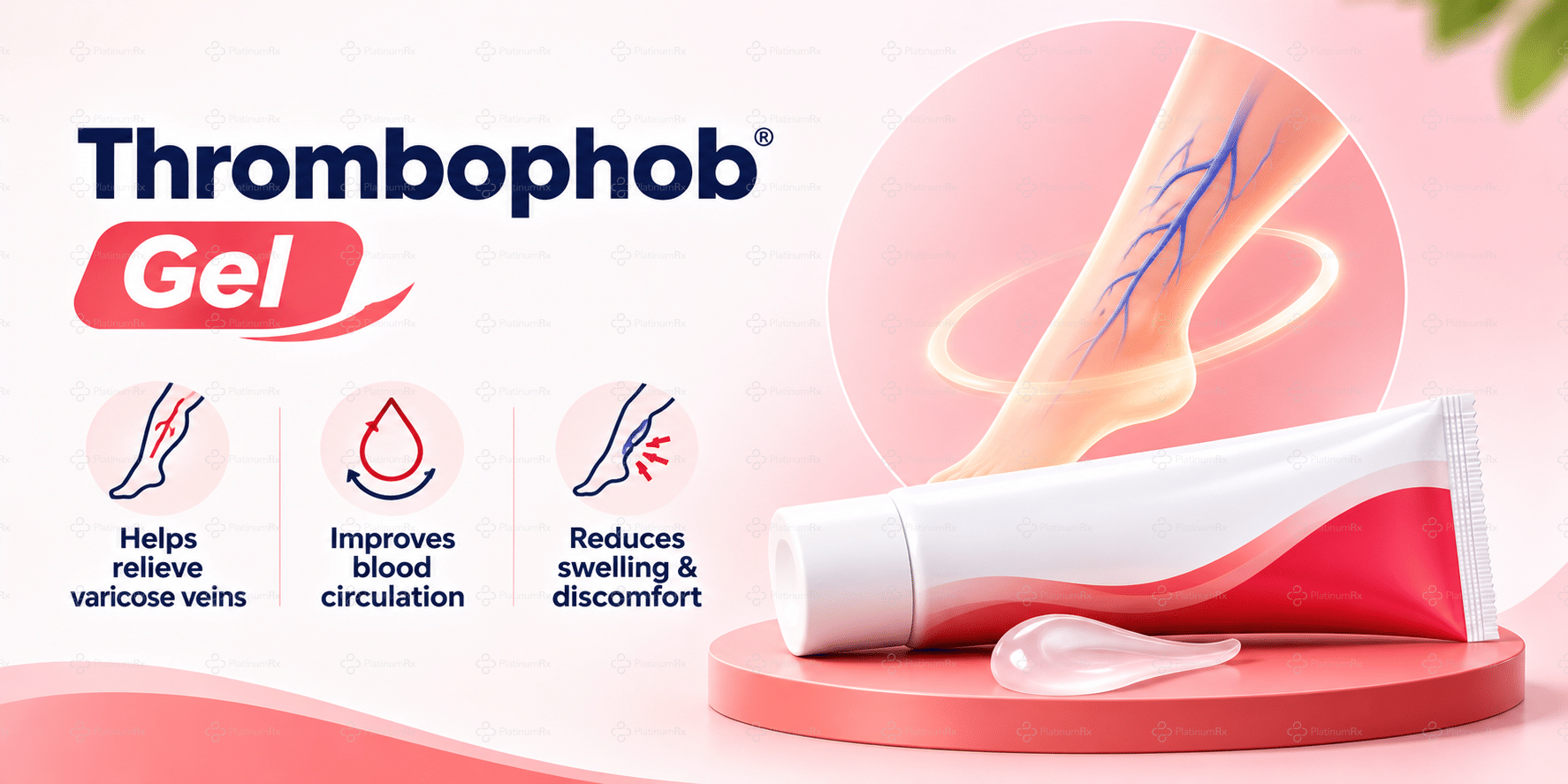
Thrombophob gel is a clear gel you rub on the skin over a painful, swollen vein or a bruise. It contains heparin, which calms inflammation and eases pain and swelling close to the skin, and benzyl nicotinate, which opens small blood vessels so the heparin gets in. In India the maker labels it a prescription product, so use it only on a doctor's advice. It does not replace the blood-thinning tablets or injections used when a clot needs proper treatment.
Key Takeaways
- What it is: A clear gel you rub on the skin for painful surface veins and bruises.
- Active ingredients: Heparin and benzyl nicotinate.
- Used for: Superficial phlebitis, small bruises and painful varicose veins.
- Not meant for: Open wounds, the eyes or mouth, deep vein clots, or anyone allergic to heparin or benzyl nicotinate.
- Prescription: Needed in India. Use it only on a doctor's advice.
- How to take: Rub a small amount into clean, unbroken skin; follow the tube label for how often.
- Common side effects: Warmth, redness or itching where you applied it; these usually settle.
What Is Thrombophob Gel?
Thrombophob gel is a topical medicine you rub on the skin instead of swallowing. It combines heparin with benzyl nicotinate. It also comes as an ointment with its own directions, so check which one you have.
Buy Thrombophob Gel and its Branded Alternative
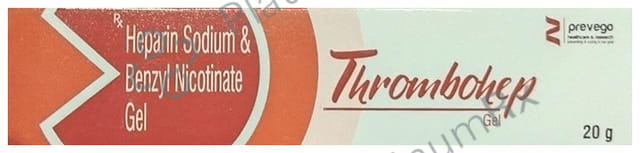
Thrombophob Gel Composition
| Ingredient | Type | What it does (in simple words) |
|---|---|---|
| Heparin (topical) | Anticoagulant | Calms swelling and redness, and eases pain in the treated area |
| Benzyl nicotinate | Vasodilator | Opens small blood vessels in the skin, which gives a warm feeling and helps heparin get in |
The gel also contains sorbic acid, a preservative. Check the exact strength printed on your pack; it may vary between variants. Thrombophob is made by Zydus Healthcare.
How Does Thrombophob Gel Work?
Think of the gel as a two-person crew: one opens the doorway, the other settles things down inside.
- Open the way: Benzyl nicotinate opens the small blood vessels in the skin, so the area feels warm and more heparin gets through.
- Calm the vein: Heparin calms the swelling, redness and pain around a surface vein, and it also works with a protein in your blood that controls clotting.
Only a small amount of heparin reaches your bloodstream, so it works where you rub it rather than thinning your blood all over.
Uses of Thrombophob Gel
Doctors usually prescribe Thrombophob gel for:
- Superficial phlebitis, where a vein just under the skin is sore, warm and tender to touch
- A small clot in a surface vein, once deep veins are checked
- Bruises and haematoma, where blood collects under the skin after a knock
- Sprains and strains after a minor knock, where the skin is unbroken. The maker lists them, but there is no good evidence a heparin gel speeds recovery, so use it only on your doctor's advice.
- Painful varicose veins, where swollen veins ache, feel heavy or throb
- Swelling after an injury, where fluid builds up around a joint or limb
It does not treat a deep vein clot and does not kill infection. If redness is spreading or you feel feverish, see a doctor.
Superficial Phlebitis vs DVT: Is Thrombophob Gel Right for You?
| Superficial phlebitis | Deep vein thrombosis (DVT) | |
|---|---|---|
| What it feels like | A tender, warm vein under the skin | A deep ache or cramp in the calf or thigh, often with swelling |
| Sign or pattern | A hard, knobbly cord along the vein | Sudden swelling of the whole limb |
| Is Thrombophob gel suitable? | Yes, for a small area a doctor has checked | No. Do not treat it at home |
| What usually helps | A gel or cream for small areas, compression, pain relief | Urgent medical assessment and blood-thinning medicine |
A deep clot needs urgent treatment, not a gel, because it can travel to the lungs.
How to Take Thrombophob Gel
- Wash your hands, then clean and dry the area you are treating.
- Squeeze a small amount of gel onto the sore area.
- Rub it in gently until it disappears; massage helps it get through the skin.
- Keep it away from your eyes, mouth and any broken skin.
- Wash your hands again and close the cap firmly.
- Follow your doctor's advice or the tube label for how often to use it.
How Much to Take
Your doctor decides how much and how often, based on the size of the area and what else is being done for the vein. Follow the tube directions.
Do not use more than you have been told to. A thicker layer does not help and only raises the chance of skin irritation.
Children should use this gel only on a doctor's advice. Do not apply an adult medicine to a child on your own.
If someone swallows the gel, rinse the mouth with clean water and call your doctor. If a child gets gel in the eyes, rinse well and get medical help. Take the tube with you.
What If You Miss a Dose?
Apply it when you remember. If your next application is close, skip the missed one. Never double up.
How Long Does It Take to Work?
Most people notice less pain and swelling over a few days of regular use, not after one application. Superficial phlebitis often settles within one to two weeks; if the pain, swelling or hardness worsens, or the redness spreads, see your doctor.
Storage
Keep the tube closed in a cool, dry place, away from sunlight and out of children's reach. Do not use it after the expiry date.
Side Effects of Thrombophob Gel
Most people use it without trouble. If the skin reacts, it is usually mild and settles once you stop.
Common and mild:
- Warmth or a tingling feeling where you applied the gel
- Flushing, or mild redness of the treated skin
- Itching
- Mild irritation of the treated skin
- A little dryness
Rare but serious (stop the medicine and see a doctor right away):
- Hives, or a rash that spreads beyond the area you treated
- Small blisters, weeping or broken skin where the gel was applied
- Swelling of the face, lips or throat, or trouble breathing
- Severe itching that starts within a day or two
Redness and warmth come mainly from benzyl nicotinate, which opens small blood vessels. Itching or hives can be an allergy to heparin, benzyl nicotinate or the preservative, so stop the gel and tell your doctor.
Who Should Not Take Thrombophob Gel
- Anyone allergic to heparin, benzyl nicotinate, sorbic acid or any other ingredient, or who has had a severe reaction to a heparin product
- On broken skin, open wounds, ulcers or infected skin
- In the eyes, mouth, nose or other moist areas
- On a leg a doctor has told you not to rub or massage
Precautions
Tell your doctor before using Thrombophob gel if you:
- Are pregnant or planning a pregnancy (little is known about it in pregnancy)
- Are breastfeeding (ask first, and keep it off the breast)
- Have a bleeding disorder, or take blood-thinning tablets or injections
- Have had phlebitis or a clot before (you may need other treatment too)
- Have varicose veins with thin, sensitive or easily irritated skin
- Need to use it over a large area of skin
Drug Interactions
| Medicine | What can happen |
|---|---|
| Blood thinners by mouth (warfarin, apixaban, rivaroxaban) | No known interaction with the gel |
| Aspirin or clopidogrel | No known interaction; tell your doctor you use both |
| Ibuprofen and other anti-inflammatory painkillers | Often used for phlebitis; if you take a blood thinner, ask before using ibuprofen |
| Other gels, creams or ointments on the same skin | Can irritate the skin; use one at a time and let it dry |
| Compression stockings | Safe together; get them measured and fitted |
Always tell your doctor about every medicine, supplement or home remedy you are using. There is no known interaction between alcohol and the gel, but alcohol can worsen swelling in the legs.
Frequently Asked Questions About Thrombophob Gel
When to See a Doctor
A gel only eases the surface problem. Get medical help quickly if you have:
- Sudden swelling of a whole leg or arm
- Throbbing or cramping pain in the leg that is getting worse
- Redness that is spreading, or skin that feels very hot
- A hard, sore vein that is getting longer, or reaching the groin or the back of the knee
- Breathlessness, chest pain or coughing up blood — call 112
- Fever with a hot, swollen area
The Bottom Line
Thrombophob gel combines heparin with benzyl nicotinate to ease painful surface veins and bruises. Rub a small amount into clean, unbroken skin and follow your doctor's advice on how often to use it. It eases symptoms but does not clear a clot, so a deep, swollen or spreading problem needs a doctor. Warmth, redness or itching can happen and usually settles once you stop.

Add PlatinumRx as a preferred source on Google