Septran SS Tablet: Uses, Composition, Side Effects & FAQs
Last Updated: November 19, 2026

Written by:
Shaik Ashraf Ali, B.pharmacy
Reviewed by:
Dr. Jay Faldu, MBBSPublished date: 19-Nov-2026
Summary
Written by: PlatinumRx Editorial Team Published on: 17 November 2026 Last reviewed on: 17 November 2026 Next review due: 17 November 2027
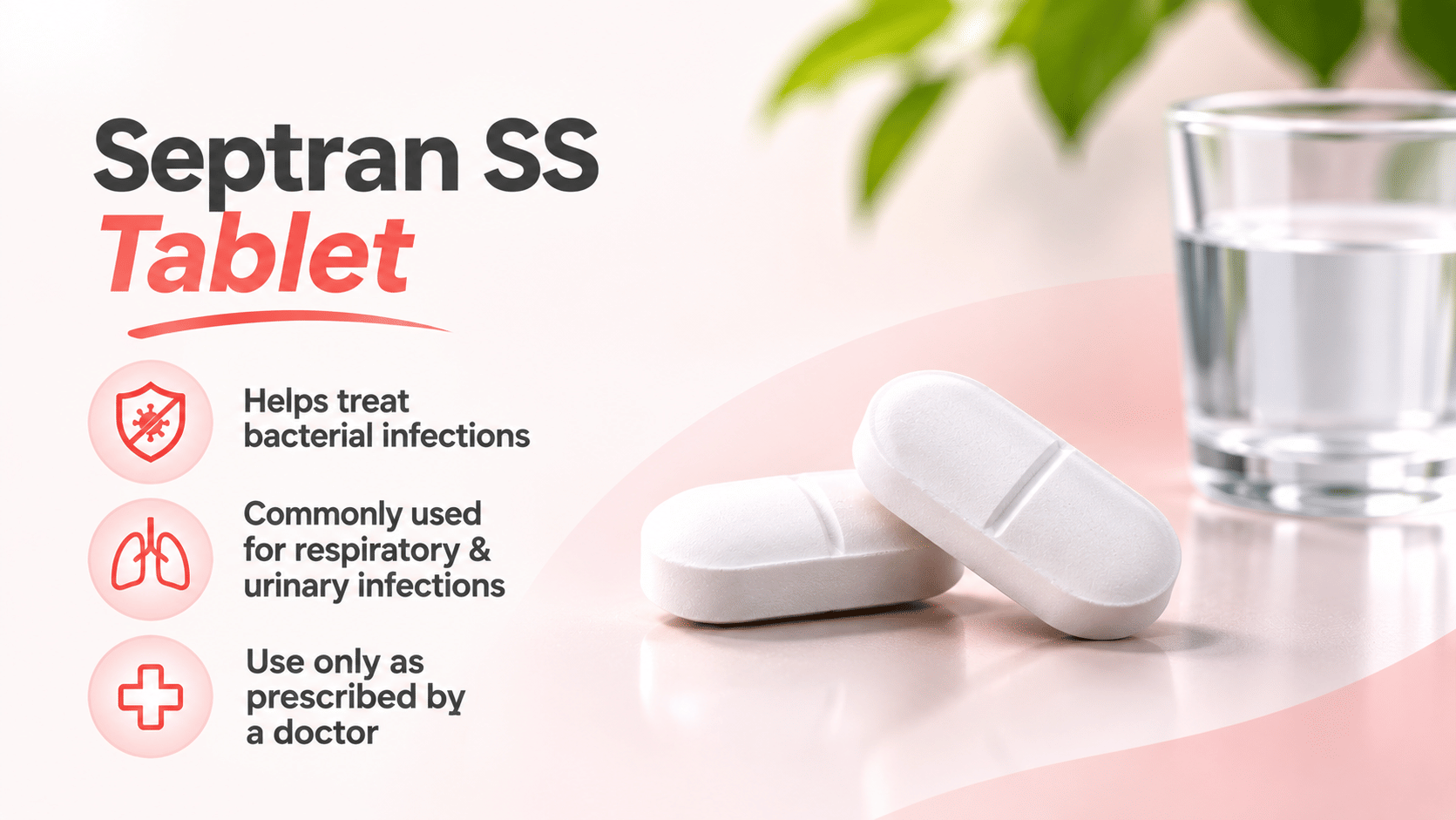
Septran SS is a tablet antibiotic used for certain bacterial infections, such as urine, chest and ear infections. It is prescription-only in India and cannot be bought without a doctor's prescription. Each tablet contains two antibiotics that block two different steps in the same bacterial process. Together they stop the bacteria from multiplying, so your body can clear the infection.
Key Takeaways
- What it is: A tablet antibiotic that combines two medicines.
- Active ingredients: Sulphamethoxazole and trimethoprim.
- Used for: Urine, chest, ear and some gut infections, when a doctor prescribes it.
- Not meant for: Colds, flu or other viral illnesses, and anyone allergic to sulphonamides.
- Prescription: Needed in India. Take it only on a doctor's prescription.
- How to take: Swallow with water and food, at the times your doctor set.
- Common side effects: Nausea, loose stools, headache, rash and thrush; usually mild.
What Is Septran SS?
Septran SS is a single-strength antibiotic tablet: the letters SS stand for single strength. Each tablet has 400 mg sulphamethoxazole and 80 mg trimethoprim.
A double-strength tablet (800 mg with 160 mg) also exists, and the dose is different.
Septran SS Composition (Per Tablet)
| Ingredient | Amount | Type | What it does (in simple words) |
|---|---|---|---|
| Sulphamethoxazole | 400 mg | Sulphonamide antibiotic | Stops bacteria making a building block |
| Trimethoprim | 80 mg | Antibiotic | Blocks the next step |
Check the exact strength printed on your pack; it varies between variants. Children's tablets and syrup have lower strengths.
How Does Septran SS Work?
Think of bacteria as a small factory that has to make its own folate to build DNA:
- Block the first step: Sulphamethoxazole stops bacteria from turning a raw material into an early folate building block. Without it, the chain cannot start.
- Block the second step: Trimethoprim stops the tool that turns that block into the folate the bacteria need. The chain stops here.
With both steps blocked, the bacteria cannot make DNA or multiply.
Bacterial Infection vs Viral Infection: Is Septran SS Right for You?
| Bacterial infection | Viral infection | |
|---|---|---|
| What it feels like | Fever with pain in one place; pus, thick phlegm or cloudy urine | Runny nose, sore throat, dry cough, body ache |
| Is Septran SS suitable? | Yes, if a doctor prescribes it | No |
| What usually helps | The right antibiotic, rest and fluids | Rest, fluids and relief of symptoms |
Using an antibiotic for a virus does not help you recover faster, but it can still cause side effects.
How to Take Septran SS Tablet
- Swallow it whole with a full glass of water.
- Take it with food or a drink to reduce stomach upset.
- Take it at the times your doctor set. Most courses are 12 hours apart, but some infections need it more often.
- Drink plenty of water through the day to prevent crystals in your urine.
- Finish the full course, even if you feel better after 2 days.
Dosage of Septran SS
For most infections, adults and children over 12 take 2 tablets every 12 hours. A few serious infections need higher or more frequent doses, which only your doctor will set. Your doctor also decides how long you need it.
Keep taking it until you have been free of symptoms for 2 days. Most people need at least 5 days.
Never increase the dose on your own. A higher dose will not clear the infection faster, but it does raise the risk of serious skin reactions and blood problems.
If your kidneys do not work well, your doctor may lower the dose, and in severe kidney disease it is usually avoided. Children can take Septran SS at a weight-based dose, and younger children are usually given the paediatric tablet or syrup. Never cut down an adult dose yourself.
If you take too many tablets, you may feel sick, vomit, or feel dizzy and confused. Go to the nearest emergency department at once with the strip.
What If You Miss a Dose?
Take it as soon as you remember. If the next dose is almost due, skip the missed one. Never take two doses together.
How Long Does It Take to Work?
Most people feel better within two to three days, but you must finish the whole course. If you are not better after 7 days, or feel worse, see your doctor.
Storage
Keep the strip in a dry place below 30°C, away from light and moisture. Keep it out of reach of children and check the expiry date.
Side Effects of Septran SS
Most people take it without trouble. If side effects happen, they are often mild.
Common and mild:
- Feeling sick (nausea), and sometimes vomiting
- Loose stools (diarrhoea)
- Headache
- Skin rash
- Thrush, a white mouth coating or vaginal itching
- A high potassium level, seen only on a blood test
Rare but serious (stop the medicine and get help right away):
- A rash that blisters or peels, or comes with fever or mouth ulcers
- Sore throat, fever, easy bruising, yellow eyes or dark urine (a blood or liver problem)
- Severe watery or bloody diarrhoea, even weeks after treatment
- Swelling of the face or lips, trouble breathing, or fainting
- Numbness or tingling in the hands and feet, or a fast or uneven heartbeat (low blood counts or high potassium)
Rash is more likely if you reacted badly to a sulphonamide before. Tell your doctor about any rash.
Who Should Not Take Septran SS
- Anyone allergic to sulphonamides or trimethoprim
- Anyone who has had low platelets after these medicines
- Severe liver damage
- Severe kidney disease, when blood levels cannot be checked
- Babies under 6 weeks old
- Acute porphyria, a rare blood condition
Precautions
Tell your doctor before taking Septran SS if you have:
- Kidney or liver disease (your dose or blood tests may need checking)
- A poor diet or low folate (your blood counts may drop)
- G6PD deficiency, an inherited red-blood-cell condition (it can break down red blood cells and cause anaemia)
- Asthma or severe allergies
- Pregnancy or breastfeeding (usually avoided, especially in the first 3 months; it passes into breast milk)
- Age over 65 (side effects are more likely)
Use sunscreen and cover up in strong sun, because this medicine makes skin sensitive to light.
Drug Interactions
| Medicine | What can happen |
|---|---|
| Blood thinners (warfarin) | Bleeding risk rises; clotting needs checking |
| Methotrexate | Dangerous together; avoid unless a specialist advises it |
| Phenytoin and digoxin | Blood levels of either medicine can rise |
| ACE inhibitors, ARBs, spironolactone | Potassium can rise too high |
| Diabetes medicines (glimepiride, repaglinide) | Blood sugar can drop too low |
| HIV medicines (zidovudine, lamivudine) | More blood problems; lamivudine levels rise |
Always tell your doctor about every medicine, supplement or home remedy you use. Alcohol is usually fine in moderation but can worsen nausea and dizziness.
Frequently Asked Questions About Septran SS
When to See a Doctor
See a doctor quickly if you have:
- A rash with blisters, peeling skin, mouth ulcers or fever
- A sore throat, fever, easy bruising, yellow eyes or dark urine
- Severe or bloody diarrhoea
- Swelling of the face or lips, trouble breathing, or fainting
- No improvement after 7 days, or you feel worse
Call 112 if you faint or cannot breathe. For an overdose, go to the nearest hospital at once with the strip.
The Bottom Line
Septran SS is a useful antibiotic for certain bacterial infections, but only when a doctor prescribes it for the right infection. Take the full course at the dose and timing your doctor gives. Common side effects like nausea, loose stools and rash are usually mild, but get help quickly for a blistering rash, fever with a sore throat, or yellow eyes.
References

Add PlatinumRx as a preferred source on Google