Generic vs Branded Medicines: What Is the Difference?
Last Updated: September 29, 2026
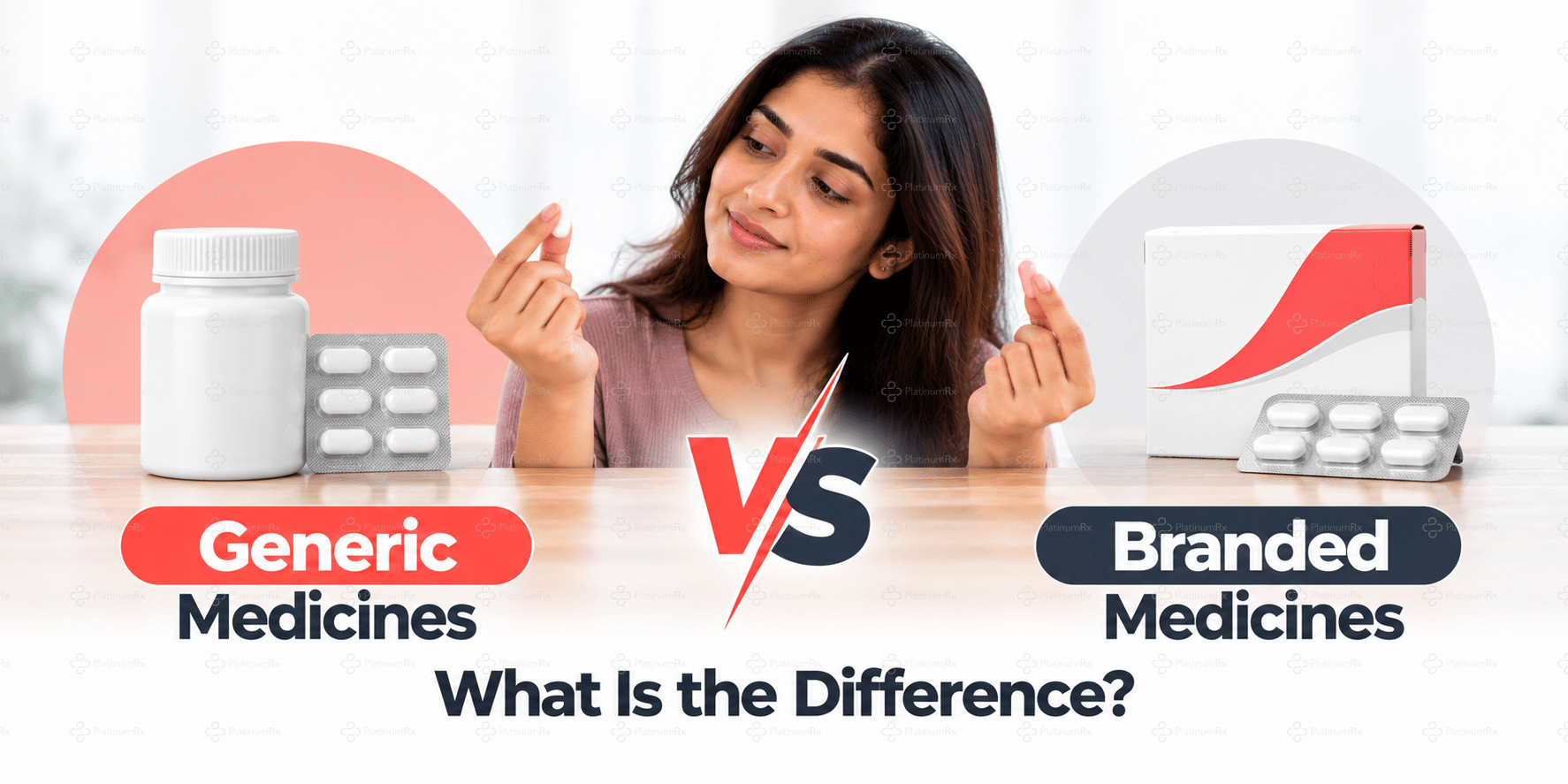
When you buy medicines, you may notice that the same medicine is available under different names and at different prices. This can make you wonder: What is the difference between generic and branded medicines? Are generic medicines as effective as branded medicines?
The main difference is usually the name, manufacturer, price, and some inactive ingredients. A generic medicine is designed to have the same active ingredient and intended effect as its corresponding branded medicine, while its appearance and inactive ingredients may be different.
Let's understand the difference in simple terms.
What Are Branded Medicines?
A branded medicine is a medicine sold under a specific brand name by a pharmaceutical company.
When a new medicine is developed, the company invests in research, development, testing and regulatory approval. The medicine is then marketed under a brand name.
For example, Crocin is a brand name associated with paracetamol. Other companies may sell medicines containing the same active ingredient under different brand names.
Branded medicines can cost more because their price can include costs related to research, development, marketing, branding and distribution.
What Are Generic Medicines?
A generic medicine contains the same active ingredient as the corresponding branded medicine and is intended to provide the same therapeutic effect when used in the same strength and dosage form.
For example, paracetamol is the active ingredient found in several branded medicines.
Generic medicines may look different from branded medicines. Their colour, shape, packaging and some inactive ingredients can also vary. These differences do not necessarily mean that the medicine works differently.
Generic vs Branded Medicines: Key Differences
| Feature | Name | Generic Medicines | Branded Medicines |
|---|---|---|---|
| Name | Usually based on the active ingredient or a generic brand name | Sold under a specific brand name | |
| Active ingredient | Same as the corresponding medicine | Contains the active ingredient | |
| Strength | Same for the equivalent product | Specific to the product | |
| Appearance | May be different | Has its own design and appearance | |
| Inactive ingredients | May differ | Specific to the formulation | |
| Often lower | Often higher | ||
| Manufacturer | Can be made by different pharmaceutical companies | Associated with a particular brand/company |
Are Generic Medicines as Effective as Branded Medicines?
For an approved generic equivalent, the medicine is required to meet applicable regulatory standards for quality, safety and effectiveness.
A generic medicine generally contains the same active ingredient as the corresponding branded medicine and is expected to work in the same way when used as approved. Regulatory authorities also assess whether the generic meets the required standards before it can be marketed.
So, a lower price does not automatically mean that a generic medicine is of lower quality.
Why Are Generic Medicines Usually Cheaper?
One of the biggest reasons people consider generic medicines is their lower price.
A company developing a new medicine may spend years and significant resources on research, development, testing and approval. Once an equivalent generic medicine becomes available, the manufacturer does not have to repeat the entire original drug-development process.
Competition between manufacturers can also help reduce prices.
This is why generic medicines are often available at a lower cost than their branded counterparts.
Do Generic Medicines Look Different?
Yes. A generic medicine does not have to look exactly like the branded version.
For example, the tablet may have a different:
- Colour
- Shape
- Size
- Coating
- Packaging
Some inactive ingredients, such as colours, flavours, fillers or preservatives, may also be different. These ingredients are not responsible for the main therapeutic effect of the medicine.
Are Branded Medicines Better Than Generic Medicines?
The price or brand name alone does not determine whether a medicine is better for a particular person.
For an approved generic equivalent, the important consideration is whether it contains the required active ingredient, strength and dosage form and meets the applicable quality and regulatory requirements.
However, not every medicine has a generic equivalent available, and some medicines may have specific considerations that affect which product is suitable.
The choice of medicine should therefore be based on the prescription, the patient's needs and appropriate medical or pharmacy advice.
Why Do People Choose Generic Medicines?
There are several reasons people may choose generic medicines:
1. Lower cost
Generic medicines are often more affordable than their branded counterparts. This can help reduce the cost of long-term treatment.
2. Same active ingredient
An approved generic equivalent contains the same active ingredient as the corresponding branded medicine.
3. More choices
Once generic versions are available, multiple manufacturers may produce medicines containing the same active ingredient.
4. Easier access to affordable treatment
Lower-cost options can make it easier for people to continue prescribed treatment, particularly when medicines are needed for a long time.
Generic vs Branded Medicines: Which Should You Choose?
If a generic equivalent is available and appropriate for your prescription, it can be a more affordable option. Your doctor or pharmacist can help you understand whether a particular generic or branded medicine is suitable for you.
When comparing medicines, don't look only at the brand name or price. Check the active ingredient, strength, dosage form and other product details.
FAQs About Generic vs Branded Medicines
Conclusion: Branded vs Generic Medicines
The difference between generic and branded medicines is mainly related to the brand name, manufacturer, price, appearance and some inactive ingredients.
An approved generic equivalent contains the same active ingredient as the corresponding branded medicine and is designed to provide the same therapeutic effect. Generic medicines are often less expensive, making them an affordable option for many people.
When choosing between a generic and branded medicine, focus on the active ingredient, strength, dosage form, quality and suitability for your treatment, rather than the brand name alone.