Duphalac Syrup: Uses, Composition, Side Effects & FAQs
Last Updated: November 26, 2026

Written by:
Srishti Bhukta, B. Pharma
Reviewed by:
Dr. Sarabjeet Kaur, MBBSPublished date: 26-Nov-2026
Summary
Duphalac is a liquid medicine for constipation, the problem where stools become hard and difficult to pass. In India, take it only on a doctor's advice. Its active ingredient is lactulose, a sugar your body cannot digest. It softens the stool, usually within a day or two.
Key Takeaways
- What it is: A sugar-based liquid medicine that softens hard stool.
- Active ingredients: Lactulose.
- Used for: Constipation, and some liver problems a doctor treats.
- Not meant for: Diarrhoea, a bowel blockage, or a very low-galactose diet (galactosaemia).
- Prescription: Take it only on a doctor's advice in India.
- How to take: Measure with the cup, usually once a day, with or without food.
- Common side effects: Gas, bloating, cramps and loose stools; usually settle in a few days.
What Is Duphalac Syrup?
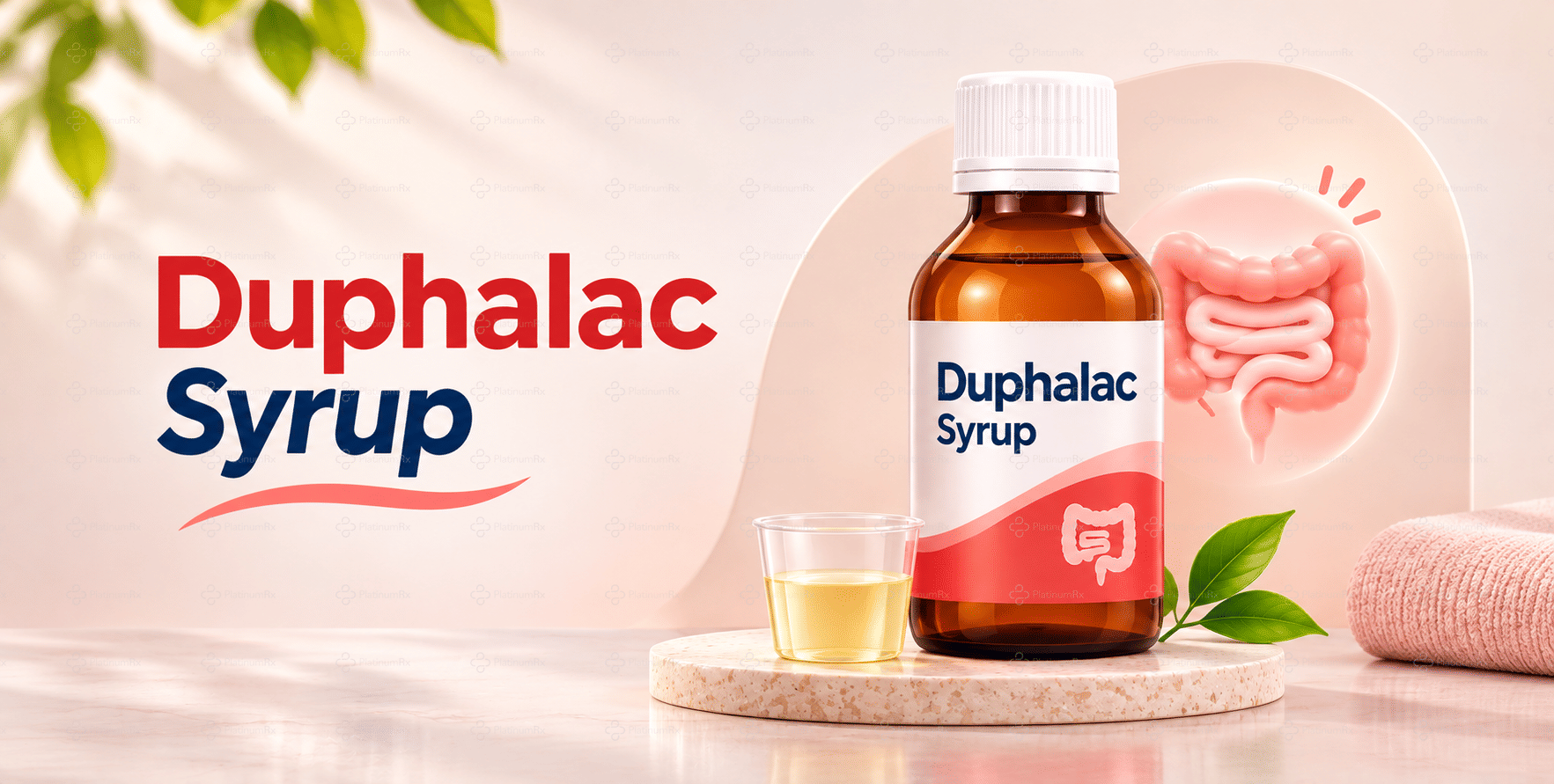
Duphalac is an oral solution, a thick sweet liquid that you drink. Many people simply call it a syrup; it is an osmotic laxative. The name has no suffix, but Duphalac Fibre adds wheat dextrin, and an enema form exists for hospital use.
Duphalac Composition (Per 5 ml)
| Ingredient | Amount | Type | What it does (in simple words) |
|---|---|---|---|
| Lactulose | 3.335 g | Osmotic laxative | Softens hard stool so it is easier to pass |
Duphalac carries 3.335 g of lactulose per 5 ml, which is the same as 10 g per 15 ml. Bottles come in 100 ml, 150 ml, 200 ml, 250 ml and 450 ml. Check the label on your bottle, because Duphalac Fibre has 2.5 g per 5 ml plus added fibre.
How Does Duphalac Work?
Lactulose is a sugar your body cannot digest, so it reaches the large bowel unchanged. There, gut bacteria turn it into mild acids that pull water into the stool and soften it. In liver disease, the same acid change turns ammonia into a form the gut cannot absorb, so it leaves in the stool and less reaches the brain.
Uses of Duphalac
Doctors usually prescribe Duphalac for:
- Constipation - where stools are hard, dry and painful to pass
- Constipation after surgery or with piles - where soft stools help healing
- Liver disease with a build-up of ammonia - where it lowers ammonia in the blood
- Bowel cleaning before a colonoscopy - in adults, under hospital care
Duphalac does not fix what is causing your constipation - low fibre, too little fluid or another medicine, for example. It also does not kill germs, so it will not treat an infection.
Constipation vs Diarrhoea: Is Duphalac Right for You?
| Constipation | Diarrhoea | |
|---|---|---|
| What it feels like | Hard, dry or lumpy stools; straining or pain | Loose or watery stools, often urgent |
| Sign / pattern | Fewer than 3 stools in a week, or less often than usual | Loose stools several times a day |
| Is Duphalac suitable? | Yes | No |
| What usually helps | More fibre, more water, daily movement; a laxative if needed | Fluids and oral rehydration salts; a doctor if it does not settle |
Giving a laxative during diarrhoea can pull out more water and leave you weak.
How to Take Duphalac Syrup
- Shake the bottle well before you pour.
- Measure the dose with the cup that comes in the pack, not a kitchen spoon.
- You can take it with or without food, but try to take it at the same time each day.
- If the taste bothers you, mix the dose with water, milk or fruit juice.
- Drink plenty of water during the day; it helps the medicine work and keeps you from drying out.
- Close the cap tightly and keep the bottle out of children's reach.
Dosage of Duphalac Syrup
Your doctor decides the dose. The usual adult dose of lactulose for constipation is 15 to 30 ml a day. The manufacturer's starting dose can be up to 45 ml, reduced to 15 to 30 ml once your bowels settle.
You can take it as one dose or in two divided doses, spaced evenly. In liver disease, it is usually taken three or four times a day. Never increase the dose on your own.
If your bowels do not respond, your doctor may increase the dose, sometimes up to 60 ml a day. Only a doctor should decide that. Children need much smaller doses, and only if a doctor prescribes it, so never give an adult dose to a child.
Too much lactulose causes diarrhoea, which drains water and body salts and can leave you weak and dizzy. If someone has bad diarrhoea, vomiting, or feels faint, get medical help at once and carry the bottle to the hospital. Call 112 if the person is very weak or cannot stay awake.
What If You Miss a Dose?
Take the missed dose as soon as you remember. If the next dose is close, skip the missed one and carry on as usual. Never take two doses to catch up.
How Long Does Duphalac Take to Work?
Most people notice softer stools in 24 to 48 hours, but it can take up to 3 days. If nothing changes after 3 days, or your constipation keeps coming back, see your doctor.
Storage
Keep the bottle tightly closed at room temperature, away from heat and direct sunlight. Do not freeze it. Keep it out of children's reach and do not use it after the expiry date.
Side Effects of Duphalac
Most people take Duphalac without any trouble. The problems it causes are usually mild and short-lived.
Common and mild:
- Gas or wind
- Bloating
- Stomach ache or cramps
- Feeling sick
- Loose stools or diarrhoea, mostly with a high dose
Rare but serious (stop the medicine and see a doctor right away):
- Swelling of the face, lips, tongue or throat, or trouble breathing
- Diarrhoea that will not stop, with muscle weakness, tiredness, passing a lot of urine, or a fast or irregular heartbeat
- Vomiting that does not settle
- Stomach pain or cramps that are severe or do not settle
The gas, bloating and cramps come from gut bacteria digesting the lactulose. They are most likely in the first few days and often ease as your body adjusts.
Explore:- Abdominal Pain Medicines
Who Should Not Take Duphalac
- Anyone allergic to lactulose or any ingredient in the syrup
- People with galactosaemia, or on a diet with almost no galactose
- People with a bowel blockage not caused by constipation
Precautions
Tell your doctor before taking Duphalac if you have:
- Diabetes (the liquid carries small amounts of galactose and lactose)
- Lactose intolerance or a very sensitive gut
- Irritable bowel syndrome, diverticular disease or Crohn's disease
- A colonoscopy or bowel test is planned (tell the endoscopy team you take Duphalac - it makes gas that can be risky with electrical tools)
- Pregnancy, or you are planning a pregnancy
- Breastfeeding
- A child under 14 (dose and safety must be set by a doctor)
- Frail or elderly and likely to take it for more than 6 months (blood salts such as potassium need checking)
Drug Interactions
| Medicine | What can happen |
|---|---|
| Non-absorbable antacids | May reduce the effect of lactulose |
| Neomycin | May change how well lactulose works; tell your doctor |
| Other laxatives | Raises the chance of diarrhoea and fluid loss |
| Medicines for diabetes | High doses may affect blood sugar; ask your doctor |
Always tell your doctor about every medicine, supplement or home remedy you are using. You can eat and drink as usual. Alcohol dries you out and makes constipation worse, so keep it to a minimum.
Frequently Asked Questions About Duphalac
When to See a Doctor
A laxative only softens stool; it does not fix the cause. See a doctor quickly if you have:
- Blood in your stool
- Severe stomach pain, or a hard, swollen belly
- Vomiting and you cannot keep fluids down
- No bowel movement for several days, with pain
- Weight loss you cannot explain
- Constipation that does not improve after 3 days of treatment
The Bottom Line
Duphalac is a common medicine for hard, dry stools, and doctors also use it for some liver problems. Use it at the dose your doctor sets, measured with the cup, and drink plenty of water through the day. If your constipation does not improve in 3 days, or keeps returning, ask your doctor instead of raising the dose.
References

Add PlatinumRx as a preferred source on Google