Azithromycin: Uses, Composition, Side Effects & FAQs
Last Updated: November 27, 2026


Written by:
Srishti Bhukta, B. Pharma
Reviewed by:
Dr. Sarabjeet Kaur, MBBSPublished date: 27-Nov-2026
Summary
Azithromycin tablet is an antibiotic for infections caused by bacteria, such as some chest, throat, sinus, skin and sexually transmitted infections. It is a prescription-only medicine in India. Its one active ingredient, azithromycin, stops bacteria from growing and multiplying.
Key Takeaways
- What it is: An antibiotic tablet that fights infections caused by bacteria.
- Active ingredients: Azithromycin.
- Used for: Bacterial chest, throat, sinus, ear, skin and some sexually transmitted infections.
- Not meant for: Colds, flu or other viral infections, or people allergic to macrolide antibiotics.
- Prescription: Needed in India. Take it only as your doctor prescribes.
- How to take: Once a day at the same time, swallowed whole with water.
- Common side effects: Nausea, diarrhoea, stomach pain and headache. These are usually mild.
What Is Azithromycin Tablet?
Azithromycin is a single-ingredient antibiotic. It belongs to a group of antibiotics called macrolides, which also includes erythromycin and clarithromycin. It also comes as a liquid for children and as an injection used in hospitals.
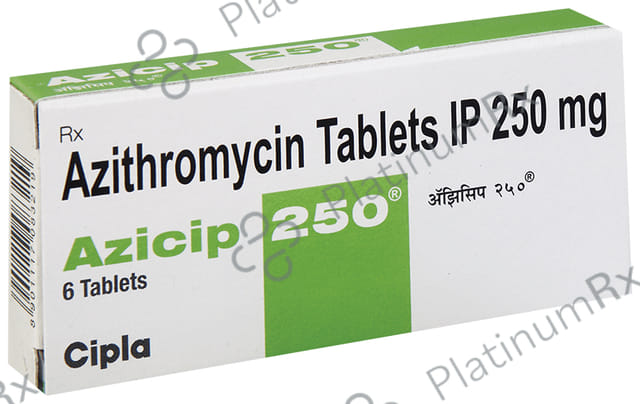
Buy Medicines Contains Azithromycin



Azithromycin Tablet Composition (Per Tablet)
| Ingredient | Amount | Type | What it does (in simple words) |
|---|---|---|---|
| Azithromycin (as azithromycin dihydrate) | 250 mg or 500 mg | Macrolide antibiotic | Stops bacteria from growing |
Tablets are commonly made in 250 mg and 500 mg strengths, and other strengths may exist. Check the exact strength printed on your strip, because it decides how many tablets make up each dose.
How Does Azithromycin Tablet Work?
Bacteria need to make proteins to grow and multiply. Azithromycin attaches to the part of the bacterial cell that builds these proteins and blocks it. The bacteria stop growing, and your body's defences can then clear the infection.
Bacterial vs Viral Infection: Is Azithromycin Right for You?
| Bacterial infection | Viral infection | |
|---|---|---|
| Common examples | Some pneumonias, strep throat, chlamydia | Common cold, flu, most coughs |
| What it feels like | Depends on the infected part, such as chest, sinus, throat or skin | Blocked or runny nose, sneezing, sore throat, aches |
| Sign / pattern | Getting worse, or high fever for over 3 days: see a doctor | Comes on over 2 to 3 days; eases in 1 to 2 weeks |
| Is azithromycin suitable? | Yes, if your doctor prescribes it | No |
| What usually helps | The antibiotic your doctor chooses | Rest, fluids and symptom relief |
Taking an antibiotic for a viral infection does not help you get better. It does raise your risk of a later infection that antibiotics cannot treat.
How to Take Azithromycin Tablet
- Take it exactly as prescribed, usually once a day.
- Swallow the tablet whole with a glass of water. Do not chew it.
- Follow the food advice on your pack or from your doctor, as advice differs between products.
- Take it at about the same time each day.
- If you use an antacid, take azithromycin at least 1 hour before it or 2 hours after it.
- Finish the full course, even if you feel better.
Dosage of Azithromycin Tablet
Your doctor decides your dose and how many days to take it. This depends on the infection, your age, your weight and your liver and kidney health.
For many adult infections, a common course is 500 mg once a day for 3 days, or 500 mg on day 1 and then 250 mg once a day on days 2 to 5. Some sexually transmitted infections are treated with a single larger dose. These are examples only, not a plan to follow on your own.
Never increase the dose on your own. A higher dose does not clear the infection faster, but it does make nausea, vomiting and diarrhoea more likely.
Children usually get the liquid form, with the dose worked out from their weight. Give it only on a paediatrician's advice, and never give an adult tablet to a child unless the doctor says so.
If someone takes too much, contact a doctor straight away. For a large overdose or if someone feels very unwell, go to the nearest hospital emergency department or call 112, or 108 for an ambulance. Carry the medicine strip with you.
What If You Miss a Dose?
Take the missed dose as soon as you remember. If it is almost time for your next dose, skip the missed one and carry on as normal. Never take two doses together to make up for a missed one.
How Long Does It Take to Work?
Most people start to feel better within the first few days. Tell your doctor if you do not feel better after 3 days, or if you feel worse at any time.
Storage
Store the tablets at room temperature, below 30°C, in the original pack, away from heat and moisture. Keep them out of reach of children and do not use them after the expiry date.
Side Effects of Azithromycin Tablet
Most people take azithromycin without serious trouble. Side effects are usually mild and settle once the course ends.
Common and mild:
- Nausea or vomiting
- Diarrhoea or loose stools
- Stomach pain or indigestion
- Headache
- Loss of appetite
- Dizziness or tiredness
- Changes in taste
Rare but serious (stop the medicine and see a doctor right away):
- Fast, pounding or irregular heartbeat, fainting or chest pain
- Swelling of the lips, face or throat, wheezing, trouble breathing, or a rash with blisters or peeling skin
- Yellow skin or eyes, dark urine, pale stools or pain in the upper right side of the belly
- Severe, watery or bloody diarrhoea, even weeks after the course ends
- Severe pain in the stomach or back
Stomach upsets are the most common side effects and are more likely with the large one-time doses. The heart rhythm risk is higher in older people and in those who already have heart rhythm problems.
Who Should Not Take Azithromycin Tablet
- People allergic to azithromycin
- People allergic to erythromycin or other macrolide antibiotics
- People who had jaundice or liver problems after azithromycin before
Precautions
Tell your doctor before taking azithromycin if you have:
- Heart problems, including an irregular, fast or slow heartbeat, or heart failure
- A family history of heart rhythm problems
- Low potassium or magnesium in your blood
- Liver or kidney disease
- Myasthenia gravis (azithromycin can make this muscle weakness worse)
- Had diarrhoea with antibiotics in the past
- Pregnancy, plans to become pregnant, or are breastfeeding (your doctor will weigh the benefits and risks)
- Old age (older people are more sensitive to its effects on heart rhythm)
Drug Interactions
| Medicine | What can happen |
|---|---|
| Antacids with aluminium or magnesium | Can reduce how much azithromycin your body takes in |
| Blood thinners (warfarin, dabigatran, edoxaban) | Blood-thinning effect may rise; blood tests may be needed |
| Medicines that affect heart rhythm (amiodarone, sotalol, citalopram, some antipsychotics, domperidone, moxifloxacin, hydroxychloroquine, chloroquine) | Higher risk of an abnormal heartbeat |
| Rifabutin (an antibiotic) | Your doctor may watch you more closely for side effects |
| Digoxin, colchicine, ciclosporin, tacrolimus | Your doctor may watch you more closely for side effects |
| Statins for cholesterol (simvastatin, atorvastatin) | Your doctor may check whether the combination suits you |
| Ergotamine for migraine, nelfinavir for HIV | Your doctor may watch you more closely for side effects |
Always tell your doctor about every medicine, supplement or home remedy you are using. Avoid alcohol if azithromycin makes you dizzy, because it can make you feel worse.
Frequently Asked Questions About Azithromycin Tablet
When to See a Doctor
An antibiotic helps only if the right medicine is used for the right infection. See a doctor quickly if you have:
- No improvement after 3 days, or symptoms getting worse
- High fever, breathlessness or chest pain
- A racing or irregular heartbeat, or fainting
- Yellow skin or eyes, or dark urine
- Severe, watery or bloody diarrhoea
- A rash, swelling of the face or trouble breathing
The Bottom Line
Azithromycin tablet is an antibiotic for bacterial infections, prescribed by a doctor. Take it as prescribed and finish the full course, even after you feel better. The most common side effects are nausea, diarrhoea, stomach pain and headache, which usually pass.
Medical Disclaimer
This article is for general information only and is not a substitute for advice from a qualified doctor or pharmacist. Always consult a healthcare professional before starting, stopping or changing any medicine.
References

Add PlatinumRx as a preferred source on Google